

Every year, thousands of Indians invest in Dubai real estate. They’re not doing it because they love spending money. They’re doing it because Dubai offers something rare. A property market that actually makes sense for foreign investors.
Think about buying property in India. The complexity. The paperwork nightmares. The uncertainty about titles. The taxes that keep piling up. Now imagine a system where everything is digital, transparent, and foreigner-friendly. That’s what Dubai built, and that’s why Indians can’t stop buying there.
But here’s what most people don’t tell you. How to buy property in Dubai from India isn’t complicated, but it does require knowing the exact steps. Miss one crucial detail, and you could waste months or lose money to preventable mistakes.
This guide walks you through everything. The legal requirements Indian buyers must meet. The actual costs beyond the property price. The documents you’ll need. The areas where Indians typically invest. And the honest pros and cons that property consultants won’t mention because they want your commission.
Let’s start with why this even makes sense in the first place.
Why Dubai Became India’s Favorite International Property Market
Dubai and India have a special relationship. Over 3.5 million Indians live in the UAE. That’s more than the entire Emirati population. This massive Indian community creates familiarity, which reduces the fear of investing in a foreign country.
But community presence alone doesn’t explain the property rush. The real reasons are financial and practical.
Zero property tax is the first massive advantage. In India, you pay property tax annually based on your property’s value. It varies by city but it’s always there, eating into your returns. Dubai charges zero property tax. Ever. You buy a villa worth 5 million dirhams, and you’ll never pay a single dirham in ongoing property taxes. That difference compounds dramatically over decades.
High rental yields make Dubai properties actually profitable. Indian metropolitan property typically generates 2% to 3% annual rental returns. That’s terrible. Your money grows faster in a fixed deposit. Dubai properties consistently deliver 6% to 10% annual rental yields depending on location and property type. That’s real, investable income that justifies the purchase.
Transparent ownership eliminates the title drama that haunts Indian real estate. Every Dubai property transaction goes through Dubai Land Department. Everything is digital. Everything is recorded. You get a proper title deed with your name on it. No disputes about who actually owns what. No surprise claims from someone’s distant relative.
100% freehold ownership in designated areas means you truly own the property. Not a 99-year lease. Not some complicated ownership structure. Actual ownership that you can pass to your children. Indians can buy, own, sell, and rent out properties just like local Emiratis can in freehold zones.
Strong currency and economy provide stability. The UAE dirham is pegged to the US dollar at a fixed rate. No currency shocks. No sudden devaluations. The economy is diversified beyond oil now, with tourism, finance, trade, and technology sectors all thriving. Your investment sits in a stable economic environment.
Easy repatriation of rental income and sale proceeds matters enormously. You can transfer money from Dubai to India through proper banking channels without drama. The rental income you earn can come back to your Indian bank account. When you sell, the proceeds can return home. Many countries make this difficult. Dubai makes it straightforward.
Short flight distance from major Indian cities is practical. Delhi to Dubai is under four hours. Mumbai to Dubai is even shorter. You can visit your property without losing days to travel. If issues arise, you can be there quickly.
Compare this to buying property in London, Toronto, or Sydney. Complicated tax structures. Difficult residency requirements. Currency risk. Time zone challenges. Dubai removes most of these friction points specifically for international investors like Indians.
The Indian government’s Liberalised Remittance Scheme allows residents to send up to $250,000 per year abroad for permitted transactions, including property purchases. This legal framework makes the entire process legitimate and trackable.
All these factors combine to make Dubai the most accessible international property market for middle-class and upper-middle-class Indian investors.
Understanding What Indians Can Actually Buy
Before we dive into the process, let’s clarify what you can and cannot buy as an Indian citizen in Dubai. This matters because confusion here leads to wasted time and wrong decisions.
Freehold ownership is available in specific designated areas. In these zones, foreigners including Indians can buy property and own it completely. You get full ownership rights. You can live there, rent it out, sell it, or leave it to your heirs. Popular freehold areas include Downtown Dubai, Dubai Marina, Business Bay, Jumeirah Lake Towers, Dubai Sports City, and Jumeirah Village Circle.
Leasehold ownership exists in some areas where foreigners can lease property for up to 99 years. This isn’t as good as freehold because you don’t truly own it forever, but 99 years is essentially a lifetime for most investment purposes. Arabian Ranches and some parts of Jebel Ali offer leasehold options.
Restricted areas exist where only UAE and GCC nationals can buy. You cannot purchase property in these zones as an Indian citizen. Deira and parts of old Dubai fall into this category. Trying to buy in restricted areas wastes everyone’s time.
Property types available to Indians include apartments in high-rise towers, villas in gated communities, townhouses in family-friendly developments, and off-plan properties still under construction. You can buy ready properties or book under-construction projects with payment plans.
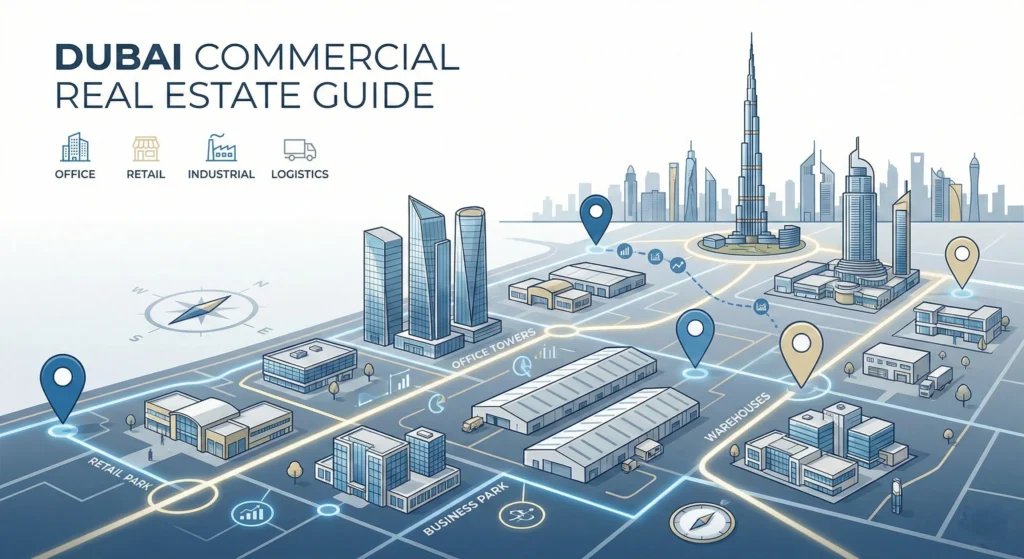
Commercial property is also available. Offices, retail spaces, and warehouses can be purchased in certain free zones and business districts. However, residential property is more popular among Indian investors because rental demand from expats remains consistently strong.
One common question: Can you buy land? Yes, but with conditions. Raw land plots are available in some freehold areas, but banks typically don’t finance land purchases. You need full cash payment. Most Indian investors stick to apartments and villas because they’re easier to finance, rent out, and eventually sell.
The key is focusing on freehold areas where your ownership is complete and permanent. Don’t get distracted by amazing deals in restricted zones where you legally cannot buy.
The Complete Step-by-Step Buying Process
Let’s walk through exactly how to buy property in Dubai from India in practical, actionable steps. Follow this sequence, and you’ll navigate the process without major surprises.
Step 1: Get Crystal Clear on Budget and Purpose
This seems obvious but most people skip proper planning. Are you buying for investment income, capital appreciation, personal use during Dubai visits, or eventual migration? Each purpose points to different property types and locations.
Investment buyers should focus on high-rental-yield areas with strong tenant demand. Properties near business districts, metros, and amenities rent faster and command better rates. One-bedroom and two-bedroom apartments typically offer the best rental returns because they’re affordable for the massive population of single professionals and small families in Dubai.
Capital appreciation buyers might target emerging areas or upcoming developments where prices could increase significantly over 5 to 10 years. Off-plan properties in developing neighborhoods sometimes offer this opportunity, though with more risk.
Personal use buyers should prioritize location convenience over investment returns. If you visit Dubai twice a year for two weeks each time, maybe a studio near tourist attractions makes sense. You use it when you’re there, and rent it out the rest of the year.
Budget calculation needs to include everything, not just the property price. Add 4% for Dubai Land Department fees. Add 2% for agent commission if you’re using one. Add registration and administrative charges of around 5,000 to 10,000 dirhams. Factor in furniture costs if you’re buying unfurnished. Include annual service charges that cover building maintenance, security, and amenities.
A property listed at 1 million dirhams actually costs closer to 1.07 to 1.1 million dirhams after all fees. Budget for the real total, not just the advertised price.
Currency conversion matters too. Dirhams to rupees fluctuates. A 1 million dirham property equals roughly 2.25 to 2.35 crore rupees depending on exchange rates. Factor in bank charges for international transfers as well.
Don’t stretch your budget to the absolute maximum. Leave breathing room for unexpected costs or opportunities to upgrade your choice if you find something better.
Step 2: Pick Your Location Strategically
Location determines everything in real estate. Returns, rental demand, appreciation potential, and eventual resale ease all depend on where you buy.
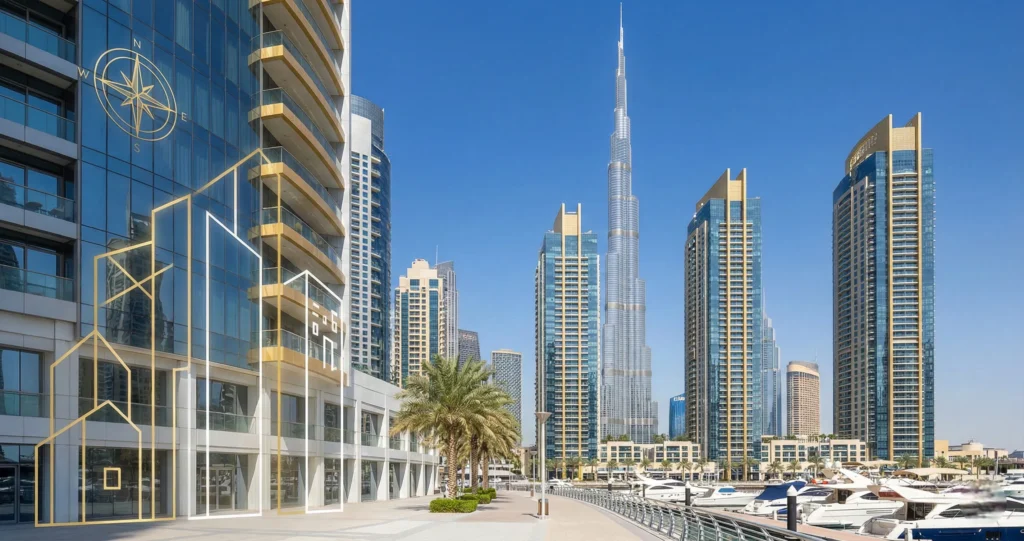
Downtown Dubai is the premium central district. Burj Khalifa, Dubai Mall, and the fountain shows are here. Properties cost more but rental yields are solid because of tourist demand for short-term rentals. If you’re targeting Airbnb-style rental income, Downtown works well. Expect to pay premium prices though.
Dubai Marina is another high-demand area. Waterfront living attracts expats. Restaurants, beaches, and entertainment options are everywhere. Rental demand stays consistently strong. Properties here hold value well because the area is fully developed and highly desirable.
Business Bay offers good value for investors. It’s close to Downtown but cheaper. Many companies have offices here, creating demand from business professionals. Rental yields often hit 7% to 8% because property prices are more reasonable while rents stay competitive.
Jumeirah Village Circle, commonly called JVC, is popular among Indian investors specifically. More affordable than Dubai Marina or Downtown. Family-friendly environment with parks and schools. Strong rental demand from middle-income families. You can find decent two-bedroom apartments here for 600,000 to 900,000 dirhams.
International City is the budget option. Very affordable properties. Large Indian community. But rental yields are lower and appreciation potential is limited because the area is older and less desirable to higher-income tenants.
Dubai South near the new Al Maktoum Airport is a long-term bet. Prices are lower now because the area is still developing. If the airport expansion happens as planned, values could increase significantly over the next decade. But that’s speculative, not guaranteed.
Here’s a simple framework. Higher prices usually mean lower rental yields but better capital appreciation and easier resale. Lower prices mean higher rental yields but slower appreciation and potentially harder resale when you eventually sell.
Match your location choice to your primary goal. Quick rental income? Go for mid-range areas with high yields. Long-term appreciation? Consider premium locations or emerging areas. Balanced approach? Business Bay and JVC offer good middle ground.
Step 3: Find a Licensed, Trustworthy Agent
You could navigate the Dubai property market alone, but having a good agent makes everything smoother. The challenge is finding one who’s actually helpful rather than just pushing whatever earns them the highest commission.
RERA registration is mandatory. Every real estate agent in Dubai must be licensed by the Real Estate Regulatory Agency. Ask to see their broker card. It should have their photo, license number, and the brokerage company they work for. No license means they’re operating illegally, and you should walk away immediately.
Indian agents working in Dubai understand your perspective, concerns, and communication style. Many established brokerages have Indian agents specifically for this reason. They can explain things in Hindi or other Indian languages if you’re more comfortable that way.
Check their track record by asking how many Indian clients they’ve helped. Request references or testimonials. Legitimate agents will happily connect you with past clients who can share their experience.
Commission structure is typically 2% of the property price, paid by the buyer. Some sellers include agent commission in their asking price, but usually buyers pay. This is standard, so don’t try to avoid it by going direct unless you really know what you’re doing.
Communication responsiveness matters enormously when you’re buying from India. You need an agent who responds quickly on WhatsApp, email, or calls. Time zone differences already create delays. An unresponsive agent makes everything frustratingly slow.
Red flags include agents pushing you to decide immediately, agents who can’t show their license, agents offering deals that seem unrealistically cheap, or agents asking for payments directly to their personal accounts rather than proper escrow or company accounts.
Good agents send you multiple options matching your criteria. They answer questions patiently. They explain the process clearly. They connect you with lawyers or mortgage brokers if needed. They don’t pressure you into buying something that doesn’t fit your needs.
Step 4: Shortlist Properties and Make Your Offer
Once you know your budget and location, your agent will send listings. Property portals like Bayut, Property Finder, and Dubizzle also let you browse options directly. Take your time reviewing choices.
Virtual viewings work well when you’re in India. Agents can do live video tours showing you the property, the building, the view, and the surrounding area. This isn’t as good as being there in person, but technology makes it pretty effective. You can ask them to focus the camera on specific things you care about.
Physical visits are better if you can manage it. Book a trip to Dubai for a few days. Schedule viewings of your top choices. See the properties in person. Check the actual condition beyond what photos show. Visit at different times of day to understand traffic patterns, noise levels, and neighborhood activity.
Comparison is crucial. Don’t fall in love with the first property you see. View at least five to ten options. Compare price, size, view, building condition, amenities, and location accessibility. This gives you perspective on what represents good value.
Making an offer happens once you decide on a property. You typically don’t pay asking price. Negotiations are normal. Offer 5% to 10% below the asking price and see how the seller responds. In a buyer’s market, you have more negotiation power. In a seller’s market with high demand, you might need to offer closer to asking price.
Memorandum of Understanding, or MOU, is the initial agreement. It outlines the property details, agreed price, payment terms, and completion timeline. Both buyer and seller sign it. This isn’t the final contract but it shows serious intent.
The MOU protects both parties. If the seller tries to sell to someone else after you’ve signed an MOU, they’re in breach. If you back out without valid reason, you might lose your deposit.
Booking amount typically ranges from 5,000 to 10,000 dirhams. Some sellers ask for more. This secures the property while paperwork gets processed. Make sure this payment goes into an escrow account, not directly to the seller’s personal account.
Step 5: Arrange Your Payment
Now comes the money part. How do you actually get funds from India to Dubai legally and efficiently?
Liberalised Remittance Scheme from the Reserve Bank of India allows resident Indians to send up to $250,000 per financial year abroad for permitted purposes including property purchases. You’ll need to fill out Form A2 at your bank declaring the purpose of the remittance.
Required documents for remittance typically include your passport, PAN card, property purchase agreement or MOU, and proof of the property’s value. Banks want to ensure the transaction is legitimate and properly documented.
Multiple remittances across financial years work if your property costs more than $250,000. You can send the maximum one year, and continue the next year. Many off-plan properties with long payment plans naturally spread across multiple years, making this easier.
Wire transfer is the most common method. Your Indian bank sends money directly to the seller’s account or to the escrow account set up for the transaction. Expect this to take 2 to 5 business days depending on both banks’ processing speed.
Exchange rates and charges will reduce the amount received. Banks charge for international wire transfers, usually 500 to 2,000 rupees depending on the amount. The exchange rate your bank offers might be slightly worse than the market rate. Factor these costs into your budget.
Down payment for ready properties is typically 10% to 30% of the property price. The remaining amount can be paid through a mortgage if you qualify, or through your own funds if you’re paying cash. Most Indian buyers in Dubai pay 100% cash because getting UAE bank mortgages as non-residents is complicated.
Developer payment plans for off-plan properties are more flexible. Pay 10% at booking. Another 10% at various construction milestones. The remaining amount on completion. This spreads the financial burden over 1 to 3 years depending on the project timeline.
Escrow accounts protect buyers for off-plan purchases. Your money goes into a protected account that the developer can only access as construction progresses according to approved stages. If the developer fails to deliver, the escrow system protects your funds. Always verify that off-plan purchases use proper escrow arrangements.
Step 6: Complete Legal Documentation and Registration
The legal process in Dubai is refreshingly straightforward compared to Indian property transactions, but you still need to handle it properly.
Sale and Purchase Agreement, also called SPA, is the main contract. It details everything about the transaction. Property specifics, price, payment schedule, completion date, and both parties’ obligations. Have a lawyer review this before signing if the amount is substantial. Legal review costs 2,000 to 5,000 dirhams but protects you from problematic terms.
No Objection Certificate, or NOC, comes from the developer or building management. It confirms no outstanding service charges or issues with the property. You cannot complete registration without this. The seller must obtain it, but verify they actually have it before final payment.
Transfer documents include Form B from Dubai Land Department, passport copies, visa copies if applicable, and Emirates ID for residents. Since you’re buying from India, your agent or lawyer can handle submission through Power of Attorney.
Power of Attorney becomes necessary when you’re not physically present in Dubai for the final registration. You authorize someone in Dubai, usually your agent or a lawyer, to complete the transaction on your behalf. This document must be notarized at the UAE embassy in India or attested properly.
Dubai Land Department is where final registration happens. Your representative goes to the DLD office, submits all documents, pays the 4% transfer fee plus registration charges, and receives your title deed. This usually happens in one appointment if all paperwork is correct.
Title deed is your proof of ownership. It’s a formal document with your name, the property details, and official stamps. You receive a physical copy and it’s also registered in the DLD digital system. Keep this document very safe. It’s like owning shares in a company. The certificate proves ownership.
Utility transfers for electricity, water, and cooling (if applicable) need to happen after registration. Your agent or property manager can handle this. Security deposits with DEWA, the utilities company, are typically 2,000 to 4,000 dirhams depending on property size.
The entire registration process from MOU signing to title deed receipt usually takes 2 to 4 weeks for ready properties. Off-plan properties take longer because you’re waiting for construction completion.
Step 7: Set Up for Rental Income
If you bought for investment, you need to prepare the property for tenants. This step determines whether you actually generate the returns you calculated. Much like how property management software helps streamline rental operations, having proper systems in place for your Dubai property ensures smooth rental management.
Furnishing decisions matter based on your target market. Unfurnished apartments rent to families planning long-term stays. They bring their own furniture. Furnished apartments attract expats on short assignments or young professionals who don’t want to buy furniture. Fully furnished properties can command 10% to 15% higher rent but require 50,000 to 150,000 dirhams upfront for decent furniture.
Property management companies handle everything for 5% to 10% of annual rent. They find tenants, handle viewings, collect rent, coordinate maintenance, and deal with issues. If you’re in India, property management is basically essential unless you have family in Dubai who can handle things.
Rental listings go on platforms like Bayut, Property Finder, and Dubizzle. Your property manager handles this, but verify they’re actively marketing your property with good photos and accurate descriptions. Bad listings mean longer vacancy periods.
Tenant screening protects your investment. Check employment letters, passport copies, and previous rental history. The last thing you want is a tenant who damages property or doesn’t pay rent. Professional property managers have systems for proper screening.
Rental contracts in Dubai are typically one year with rent paid in one to four cheques. Many tenants prefer splitting rent into multiple payments. The contract should be registered with Ejari, the official rental registration system. This protects both landlord and tenant legally.
Annual service charges get paid by the landlord, not the tenant, in most cases. This covers building maintenance, common area cleaning, security, and amenities. Charges vary wildly from 5 to 25 dirhams per square foot annually depending on the building and included services. Factor this into your return calculations.
Expected vacancy periods between tenants typically run 1 to 2 months. Even in high-demand areas, properties sit empty while finding new tenants. Budget for this in your annual return projections. A property that should generate 70,000 dirhams annual rent might only produce 65,000 after accounting for vacancy.
Documents You Must Have Ready
Indian buyers need specific paperwork for Dubai property purchases. Getting these ready beforehand speeds up the entire process significantly.
Passport is obviously mandatory. It must have at least six months validity remaining. Make multiple clear copies of the data page. You’ll need to submit copies repeatedly throughout the process.
Passport-size photographs with white background. Keep 10 to 15 copies ready. Various forms and applications require these. Better to have extras than to scramble getting more photos taken.
PAN card might be required by your Indian bank for LRS remittances but isn’t directly needed for the Dubai transaction itself. Still, keep copies handy for your bank’s requirements.
Address proof like Aadhaar card, utility bills, or bank statements. Your Indian bank needs this for international remittances. Keep recent copies available.
Financial documents proving source of funds might be requested in some cases. Bank statements, income tax returns, or salary slips establish that you have legitimate funds for the purchase. This isn’t always asked for, but having them ready prevents delays.
Power of Attorney documents if you’re authorizing someone to act on your behalf. These need proper attestation from the UAE embassy in India or through the MEA apostille process. The attestation process alone takes 1 to 2 weeks, so plan accordingly.
Marriage certificate if the property is being purchased jointly with your spouse. Both names can go on the title deed, which some couples prefer for estate planning reasons.
Property-related documents like the MOU, payment receipts, NOC from developer, and sale agreement. Your agent provides most of these, but maintain your own organized copies.
One smart move is creating a dedicated folder with all these documents scanned and saved digitally. Share this folder with your agent and lawyer. When anyone asks for a document, you can send it immediately rather than searching through papers or making trips to get things scanned.
Understanding the Total Cost Picture
The property price is just the beginning. Here’s what you actually spend when buying Dubai property from India.
Property price is obviously the largest expense. Apartments in decent locations start around 500,000 dirhams for studios and go up to several million for luxury penthouses. Villas typically start around 1.5 million dirhams and go well into the tens of millions for palatial homes.
Dubai Land Department fee is 4% of the property value plus a small admin charge of around 580 dirhams. This is mandatory for title transfer. A 1 million dirham property means 40,000 dirhams to DLD. This is not negotiable or avoidable.
Real estate agent commission typically costs 2% of the property value, paid by the buyer. Some sellers agree to pay agent commission, but usually it falls on buyers. For that 1 million dirham property, expect 20,000 dirhams in agent fees.
Mortgage arrangement fees if you’re financing part of the purchase. UAE banks charge 1% to 2% of the loan amount as processing fees. They also require property valuation reports costing 2,500 to 5,000 dirhams. Since most Indian buyers pay cash, this often doesn’t apply.
Legal fees for contract review and representation run 5,000 to 15,000 dirhams depending on the lawyer and complexity. Worth it for expensive properties or complicated transactions.
Currency conversion costs and wire transfer fees from your Indian bank. Budget 0.5% to 1% of the amount being transferred for these charges combined.
Furniture and setup costs for rental-ready properties. A basic furnished one-bedroom might need 40,000 to 70,000 dirhams. Two-bedroom units need 70,000 to 120,000 dirhams for decent furniture, electronics, and kitchen items.
Service charges paid annually to building management. These vary wildly. Budget 8 to 20 dirhams per square foot annually. A 1,000 square foot apartment might cost 8,000 to 20,000 dirhams yearly for service charges.
District cooling charges in some buildings for air conditioning. Not all buildings have this, but where it exists, expect 1,000 to 3,000 dirhams every two months during summer.
Utilities deposits with DEWA for electricity and water. Usually 2,000 to 4,000 dirhams depending on property size. This is refundable when you eventually disconnect service.
Property management fees of 5% to 10% of annual rental income if you’re using professional management.
Let’s do complete math on a 1 million dirham apartment to show the true cost:
- Property price: 1,000,000 AED
- DLD fee (4%): 40,000 AED
- Agent commission (2%): 20,000 AED
- Legal fees: 10,000 AED
- Furniture: 60,000 AED
- Service charges (first year): 12,000 AED
- Utilities deposit: 3,000 AED
- Bank charges and misc: 5,000 AED
- Total: 1,150,000 AED for a “1 million dirham” property fully ready to rent out.
That’s 15% more than the advertised price. Plan accordingly. Many buyers underestimate these additional costs and then scramble to arrange more funds.
Getting Financing: Home Loans for Indian Buyers
Most Indians pay cash for Dubai properties, but mortgages are technically possible. Let’s discuss the reality.
UAE banks occasionally provide mortgages to non-resident Indian buyers. However, requirements are strict. You need significant income, excellent credit, and usually an existing banking relationship in the UAE. Even then, many banks declined non-resident applications after 2020.
Loan-to-value ratios for non-residents typically max out at 50% to 60%. Residents get up to 75% to 80% financing. This means you need to pay 40% to 50% down payment minimum. For a 1 million dirham property, you’re paying 500,000 dirhams upfront. At that point, many buyers just pay the full amount cash.
Interest rates for UAE mortgages currently range from 4% to 6% annually depending on the bank, your profile, and whether the rate is fixed or variable. Not terrible, but also not dramatically better than what you’d achieve through alternative financing.
Developer payment plans are more realistic than bank mortgages for many Indian buyers. Buy an off-plan property with 10% to 20% down. Pay the rest in installments over 2 to 3 years as construction progresses. Final payment on completion. This internal financing from developers doesn’t require credit checks or complicated approvals.
Post-handover payment plans from some developers let you pay a large portion after the property is completed and handed over. Pay 50% during construction, then the remaining 50% over 2 to 5 years after you get the keys. This means you can potentially start renting the property and use rental income to cover the remaining installments.
Indian bank loans against property or securities in India is how some buyers arrange funds. Take a loan against your Indian property or investment portfolio, transfer money to Dubai, buy the property there. The interest rates might be higher but the approval process is simpler because you’re dealing with your existing Indian bank.
NRI-specific loans from some Indian banks for foreign property purchases exist but are rare and come with high interest rates around 9% to 12%. Usually not worth it compared to other options.
The honest reality: If you cannot arrange at least 60% to 70% of the property value in cash, buying Dubai property becomes very difficult as an NRI. The financing options are limited and complicated. Most successful Indian buyers in Dubai either pay 100% cash or use developer payment plans that spread the cost over time without requiring traditional mortgage approval.
Rental Returns and Investment Performance
Let’s discuss the actual numbers you can expect to make from Dubai rental properties, because this is ultimately why most Indians invest there. Understanding rental performance in international markets, similar to learning property management in different regions, requires careful analysis of local market conditions.
Rental yields in Dubai typically range from 5% to 10% annually depending on location and property type. Compare this to Mumbai where yields hover around 2% to 3%, or Bangalore where they’re slightly better at 3% to 4%. Dubai’s higher yields reflect the fact that property prices are more reasonable relative to rental demand.
One-bedroom apartments in mid-range areas like Business Bay, JVC, or Dubai Sports City typically yield 7% to 9%. Buy for 600,000 to 700,000 dirhams, rent for 45,000 to 60,000 dirhams annually. After service charges and management fees, your net yield is around 5% to 6%.
Two-bedroom apartments in similar areas might yield 6% to 8%. Slightly lower percentage because the purchase price is higher while rent doesn’t increase proportionally. Buy for 1 million to 1.2 million dirhams, rent for 70,000 to 90,000 dirhams annually.
Studios can yield 8% to 10% because they’re cheap to buy and rent almost as well as one-bedroom units to single professionals who just need a place to sleep. Buy for 350,000 to 450,000 dirhams, rent for 35,000 to 42,000 dirhams.
Luxury properties in premium locations like Downtown Dubai or Palm Jumeirah typically yield lower percentages around 4% to 6% because purchase prices are very high while rents, although substantial, don’t keep pace percentage-wise. These properties appeal more for capital appreciation and prestige than pure rental yield.
Capital appreciation is harder to predict but Dubai has shown strong growth in recent years. Properties in emerging areas can appreciate 20% to 40% over 3 to 5 years if development happens as planned. Established areas grow more modestly at 3% to 7% annually, roughly matching inflation and economic growth.
Rental income repatriation to India is legal and straightforward through banking channels. Your property manager deposits rent into your UAE bank account. You then transfer money to India, declaring it as rental income. You’ll need to show your property ownership documents and rental contracts to satisfy banking regulations.
Tax implications in India are important. Rental income from Dubai property is taxable in India according to Indian tax laws. You must declare this foreign rental income in your Indian tax returns. The income gets added to your total income and taxed at your applicable slab rate. Since there’s no tax treaty between India and UAE for property income, you can’t claim foreign tax credits because UAE doesn’t charge tax on rental income in the first place.
TDS on property sale at 20% plus cess applies when you eventually sell. The buyer deducts this amount and deposits it with Indian tax authorities. You can claim this when filing returns and potentially get a refund if your actual tax liability is lower.
Running the complete numbers, a typical 1 million dirham property generating 70,000 dirhams annual rent breaks down like this after all costs:
- Gross rent: 70,000 AED
- Service charges: -12,000 AED
- Property management (8%): -5,600 AED
- Vacancy allowance: -6,000 AED
- Maintenance and repairs: -3,000 AED
- Net rental income: 43,400 AED
That’s a 4.3% net yield on your 1 million dirham investment, which converts to roughly 0.98 lakh rupees yearly at current exchange rates. Not spectacular, but remember you also get potential appreciation and you’ve diversified into a stable, tax-free jurisdiction.
Legal Protections and Safety Measures
Dubai’s property market is generally transparent and safe, but you still need to protect yourself against the small percentage of problematic transactions.
Buy only in freehold areas where foreigners legally can own property. Attempting to buy in restricted zones through creative structures usually ends badly. Stick to clearly designated freehold areas.
Verify agent licensing by checking their RERA broker card and confirming it on Dubai Land Department’s website. Unlicensed agents aren’t just unprofessional. They can’t legally complete transactions, which means your deal could fall apart at the final stage.
Use escrow accounts for off-plan purchases without exception. Never pay large amounts directly into a developer’s operating account. Escrow protection is standard practice, and any developer refusing to use escrow is a massive red flag.
Avoid cash transactions completely. All payments should flow through banking channels with proper documentation. Cash deals, even if legal on paper, lack the paper trail that protects you if disputes arise.
Read contracts thoroughly before signing anything. Don’t rely only on your agent’s summary. Read the actual legal text, especially clauses about penalties, completion dates, and resolution procedures. Hire a lawyer for expensive transactions.
Check developer track record for off-plan purchases. How many projects have they completed successfully? Are there online complaints about delays or quality issues? Established developers like Emaar, Nakheel, and Damac have proven delivery records. Smaller developers might offer better prices but carry more risk.
Title verification through Dubai Land Department ensures the seller actually owns the property and has the right to sell it. Your agent or lawyer should do this as standard practice, but verify they actually did.
Building condition inspection for older properties helps avoid buying something that needs expensive repairs. Hire a professional inspector to check for major issues like water damage, structural problems, or electrical concerns.
Community regulations in each development need review. Some communities have strict rental restrictions, pet policies, or renovation rules that might affect your plans. Read the community guidelines before committing.
Insurance for your property protects against fire, water damage, and liability issues. Costs around 0.2% to 0.4% of property value annually. Not mandatory but smart, especially for rental properties.
Most problems in Dubai real estate come from buyers rushing, skipping due diligence, or ignoring red flags because they found a seemingly amazing deal. Slow down. Verify everything. If something feels wrong, walk away. Plenty of legitimate properties exist.
Common Mistakes Indian Buyers Make
Learning from others’ mistakes saves you money and stress. Here are the patterns that cause problems repeatedly.
Currency timing errors cost money unnecessarily. Some buyers lock in exchange rates at bad times and lose lakhs on conversion. If the rupee is particularly weak, consider waiting for better rates or using forward contracts to lock in future rates.
Underestimating total costs is the most common mistake. Buyers budget exactly for the property price, then struggle to cover the additional 10% to 15% in fees, charges, and furnishing. Build buffer into your budget.
Buying without visiting can lead to disappointment. Virtual tours are helpful, but they can’t show you noise levels, neighborhood feel, actual building condition, or whether the view includes construction sites. If you’re spending crores, visit in person.
Ignoring service charges when calculating returns leads to nasty surprises. A property with cheap service charges offers better returns than a similar property with expensive charges. This 8,000 to 20,000 dirham annual difference significantly impacts your actual yield.
Choosing location based only on price often backfires. The cheapest areas are cheap for reasons: poor maintenance, bad reputations, difficult tenant markets. Saving 100,000 dirhams on purchase price but then struggling to rent the property costs more long-term.
Skipping property management to save the 5% to 8% fee seems smart until something breaks at 2 AM and you’re in India trying to coordinate repairs. Professional management pays for itself in convenience and better tenant handling. Similar to managing properties in the US, having proper oversight is crucial for international investments.
Unrealistic rental expectations disappoint many investors. Online calculators showing 10% yields don’t account for vacancy, management fees, maintenance, and service charges. Calculate conservative net yields around 4% to 6% to avoid disappointment.
Buying off-plan without researching the developer occasionally results in delays, quality issues, or in rare cases, project cancellations. Check the developer’s history before paying deposits for projects still under construction.
Forgetting about Indian taxes on rental income means an unpleasant surprise when filing returns. Just because UAE doesn’t tax rental income doesn’t mean India won’t. Budget for Indian tax implications.
Not planning the exit strategy before buying creates problems years later. How will you sell when the time comes? What’s the typical buyer profile for this property type? How liquid is the resale market? Think about selling before you buy.
Making the Final Decision
So should you buy property in Dubai from India? Here’s a framework for thinking through this decision clearly.
Buy if: You have surplus funds beyond your emergency corpus and India needs. You want geographic diversification. You’re comfortable with foreign asset management. You have legitimate long-term wealth building goals. Your risk tolerance accepts currency fluctuations and market cycles.
Don’t buy if: You’re stretching financially to make this work. You need the money back within 2 to 3 years. You cannot handle the administrative work of foreign property ownership. You’re chasing quick profits based on someone’s recommendation. You haven’t thoroughly researched the process and costs.
Dubai property works best as part of a diversified portfolio, not as your only investment. If you already own property in India, have adequate insurance, maintain emergency funds, and invest regularly in markets, then adding Dubai real estate makes sense. It shouldn’t be your first or only asset.
The process of how to buy property in Dubai from India is straightforward, but execution demands attention to detail, patience, and proper planning. Thousands of Indians have successfully done this. The regulatory framework supports foreign investment. The infrastructure exists to make it work smoothly.
But success requires realistic expectations. This isn’t a get-rich-quick scheme. It’s a legitimate wealth-building strategy that generates modest rental income, offers potential appreciation, and diversifies your holdings outside India.
Take your time. Do your research. Visit Dubai and see properties in person if possible. Work with licensed professionals. Calculate total costs honestly. Plan for the long term. If you approach it methodically, Dubai property can become a valuable part of your investment portfolio.
The market is ready. The legal framework is in place. The question is whether you’re ready to take the step.