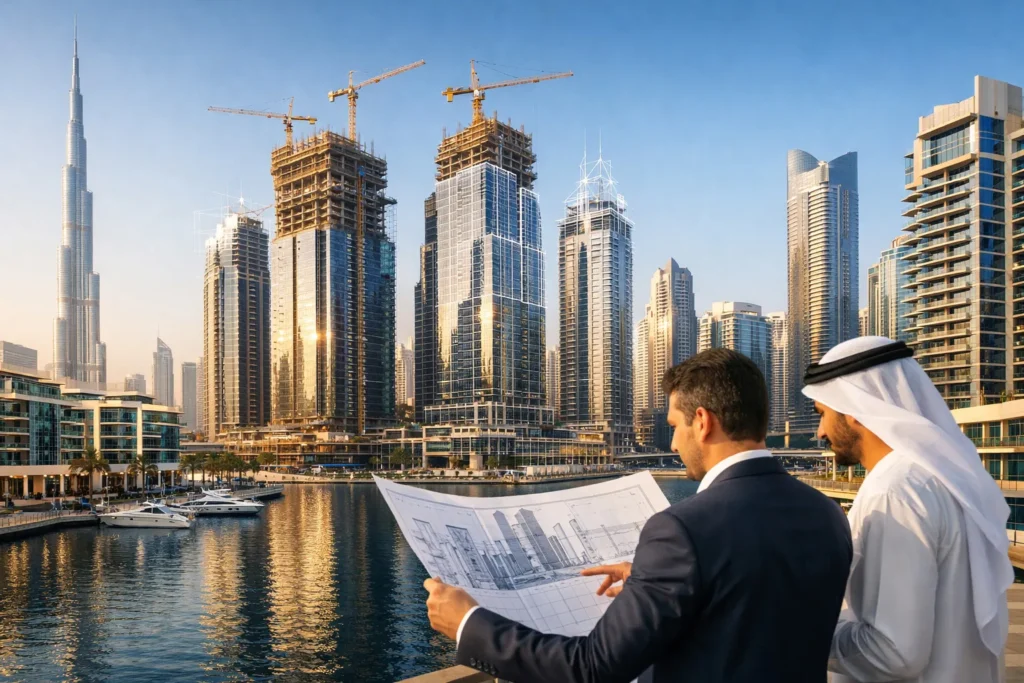


Dubai’s skyline changes almost every year. New towers rise. Luxury villas get built. Apartments fill up with residents from around the world. Behind every single one of these property deals stands a real estate agent making it happen.
If you’ve ever wondered how to become a real estate agent in Dubai, you’re asking the right question at the right time. The city’s property market is massive, and it needs skilled agents to keep transactions flowing. But here’s what most people don’t tell you. This career isn’t about showing fancy apartments and collecting easy commissions. It’s about hustle, people skills, and staying consistent even when sales are slow.
This guide breaks down everything you need to know. The exact steps to get licensed. What you’ll actually earn. The skills that separate top performers from struggling agents. And the honest reality of what this career looks like day to day.
Let’s start with why this career path makes sense in the first place.
Why Real Estate in Dubai Is Worth Your Time
Dubai’s real estate market isn’t like other cities. It moves faster. The deals are bigger. The clients come from every corner of the planet. This creates unique opportunities that you won’t find in most other places.
First, consider the sheer volume of transactions. Dubai processes thousands of property deals every single month. Sales, rentals, off-plan purchases, investment properties. The activity never really stops. Even during slower periods, the market stays active compared to other global cities.
Second, there’s no income tax on personal earnings. This is huge. Imagine making 30,000 dirhams in commissions one month. In most countries, you’d lose 25% to 40% to taxes. In Dubai, you keep every dirham. That difference compounds dramatically over a career.
Third, the commission structure favors agents. Real estate here typically pays 2% to 5% commission on sales transactions and one month’s rent on leasing deals. When you’re dealing with properties worth millions of dirhams, even a small percentage becomes substantial money.
Fourth, international buyers create constant demand. People from India, Pakistan, China, Russia, Europe, and America invest in Dubai property. Each group has different preferences, budgets, and decision-making styles. If you can connect with even one of these demographics, you have a steady stream of potential clients.
Fifth, Dubai’s government actively supports the real estate sector. New visa programs for property investors. Easier ownership rules for foreigners. Infrastructure projects that boost property values. The city wants real estate to thrive, which means your career has government backing. Top real estate developers like Emaar, DAMAC, and Nakheel continue to shape the market with innovative projects that create opportunities for agents.
The real estate agent salary in Dubai reflects all these factors. Top agents can earn more in one good month than many professionals earn in six months at traditional jobs. But that high ceiling comes with real challenges. No guaranteed salary. Fierce competition. Pressure to constantly find new clients.
Think of it like professional sports. The potential rewards are enormous. But you need to bring your A-game consistently. You can’t coast and expect success to find you.
Who Can Actually Become a Real Estate Agent Here
Before you get excited about commission checks, let’s talk about eligibility. Dubai has specific requirements, and you need to meet all of them before you can legally work as an agent.
Age matters first. You must be at least 21 years old. This isn’t negotiable. The Real Estate Regulatory Agency, known as RERA, sets this as a hard requirement. If you’re younger, you’ll need to wait or explore other opportunities in the meantime.
You need a valid UAE residence visa. You can’t work as a real estate agent on a tourist visa or visit visa. Period. Most people get their residence visa through the brokerage company they join. The company sponsors your visa as part of bringing you onto their team. Some agents get visas through family sponsorship or other means, which also works fine.
Your legal record must be clean. Dubai runs background checks. If you have serious criminal convictions, especially fraud or financial crimes, you’ll struggle to get licensed. Minor issues from years ago usually won’t block you, but major problems will.
Communication skills are essential, especially in English. Arabic helps tremendously and opens doors with local Emirati clients. But English is the business language of Dubai real estate. Russian, Hindi, Mandarin, or other languages add value depending on which client segments you target. But English is non-negotiable.
Here’s what you don’t need. A university degree. Previous real estate experience. Specific certifications from other countries. Sales background definitely helps, but it’s not mandatory. Dubai’s system focuses more on training and testing than on your previous credentials.
This accessibility is actually beautiful. A taxi driver can become a real estate agent. A restaurant server can switch careers. A recent graduate can jump straight in. As long as you meet the basic requirements and commit to learning, the path is open.
Compare this to careers like medicine or law where you need years of expensive education before you can even start. Real estate in Dubai is more democratic. Your results depend more on effort and skill than on fancy degrees. For those interested in related property careers, you might also explore how to become a property manager in California or Florida, which have different but equally accessible pathways.
The Exact Steps to Get Your Real Estate License
Let’s walk through the process step by step. This is how to become a real estate agent in Dubai in practical, actionable terms. Follow these steps in order, and you’ll be legally authorised to work within a few weeks.
Step 1: Secure Your UAE Residence Visa
Everything starts with legal residency. Without a valid UAE residence visa, you can’t take the RERA training or get licensed.
Most people handle this by joining a brokerage company first. Find a registered real estate brokerage that’s willing to bring you on as a new agent. They’ll sponsor your residence visa as part of the onboarding process. The company handles the paperwork, medical tests, and Emirates ID application.
This approach makes sense because you’ll need to work under a brokerage anyway. Might as well join one early and let them handle your visa. Just make sure the company is legitimate and registered with RERA. Check their track record. Ask current agents about their experience. A good brokerage becomes your support system, not just a visa sponsor.
If you already have residence through family sponsorship, your own business visa, or other means, that works too. You just need valid residency status before moving to the next steps.
Step 2: Register for RERA Training
The Real Estate Regulatory Agency requires all agents to complete an approved training course. This isn’t optional. It’s the foundation of your license.
The training covers essential knowledge about Dubai’s property market. You’ll learn about property laws and regulations. The rights and responsibilities of buyers, sellers, landlords, and tenants. Ethical standards for agents. How transactions actually work from start to finish. Contract basics and legal requirements.
Several approved training centers offer this course. Dubai Real Estate Institute, or DREI, is one of the main providers. Other approved centers exist as well. Your brokerage company usually recommends specific training providers they work with regularly.
The course typically runs for a few days. Some centers offer intensive schedules where you complete everything in three to five days. Others spread it across a week or two with part-time sessions. The content is the same regardless of schedule.
Cost varies but expect to pay around 1,500 to 3,500 dirhams for the complete training package. Some brokerages cover this cost as part of bringing you on. Others require you to pay upfront. Clarify this before committing to a specific company.
The training includes both theoretical knowledge and practical scenarios. You’ll study case studies of real transactions. Learn about different property types and their characteristics. Understand how to handle client objections and negotiations. It’s more practical than academic, which helps when you actually start working.
Take the training seriously even though it’s relatively short. The information you learn becomes your foundation. Agents who pay attention and ask questions during training tend to perform better once they start working with real clients.
Step 3: Pass the RERA Exam
After completing the training, you must pass the RERA examination. This test verifies that you actually absorbed the material and understand the regulations.
The exam covers everything from the training course. Property laws. Transaction procedures. Agent ethics. Client rights. Contract requirements. You’ll face multiple-choice questions testing your knowledge across these areas.
The difficulty level is reasonable if you attended the training and studied the materials. It’s not designed to trick you or make you fail. The goal is ensuring you have baseline competency before dealing with real clients and million-dirham transactions.
Most people pass on their first attempt. If you don’t pass, you can retake the exam after paying the fee again. But obviously, passing the first time saves money and gets you working faster.
Study the training materials in the days before your exam. Review any sections you found confusing. Ask your trainer questions while you still have access to them. Many training centers offer review sessions or practice questions to help you prepare.
Once you pass, you receive official confirmation from RERA. This documentation proves you’re qualified to work as a licensed real estate agent in Dubai. Keep this paperwork safe. You’ll need it for the next steps and potentially for future reference.
Step 4: Join a RERA-Registered Brokerage
Here’s something crucial. You cannot work independently as a real estate agent in Dubai. You must work under a registered brokerage company. This is a legal requirement, not a suggestion.
The brokerage provides your infrastructure. Access to property listings through databases like Bayut, Property Finder, and Dubai Land Department systems. CRM software to manage your leads and clients. Marketing materials and company branding. Office space, although many agents work remotely now. Legal support if transactions get complicated.
Choosing the right brokerage matters enormously. Different companies have different cultures, commission splits, support systems, and reputations. Some brokerages are massive with hundreds of agents. Others are small boutique firms with tight-knit teams.
Large brokerages like Emaar Properties, Damasquaretech Real Estate, Better Homes, and Allsopp & Allsopp offer established brands, extensive listings, and structured training programs. The downside is you’re one agent among many, and commission splits might be less generous.
Smaller brokerages often offer higher commission splits and more personalized support. But they might have fewer listings or less brand recognition. You’ll need to hustle harder to find clients.
Commission splits typically range from 30% to 70%. A 50/50 split means if you earn 10,000 dirhams in commission, you keep 5,000 and the company keeps 5,000. More experienced agents negotiate better splits, sometimes reaching 70% or even 80% of commissions earned.
Visit multiple brokerages before deciding. Talk to current agents. Ask about their average deals per month. Understand what support the company provides. Check if they offer leads or if you’re expected to generate all your own clients. Know the commission structure and whether there are any hidden fees or desk charges.
Your first brokerage doesn’t have to be your forever home. Many agents switch companies as they gain experience and leverage. But starting with a supportive, reputable company gives you the best foundation.
Step 5: Apply for Your Broker ID Card
Once you’ve joined a brokerage and have your RERA exam results, your company helps you apply for your official broker ID card from Dubai Land Department.
This ID card is your license to operate. It proves you’re a registered, authorized real estate professional. You’ll need to show this card when dealing with clients, viewing properties, and completing transactions.
The application process involves submitting your documents through your brokerage company. They handle most of the paperwork since they’re responsible for their agents. You’ll provide passport copies, visa documents, Emirates ID, RERA exam certificate, and possibly photographs.
Processing usually takes one to three weeks. Once approved, you receive your physical broker ID card. Keep this with you whenever you’re working. Property security guards will ask for it. Clients might want to verify your credentials. It’s your professional identity in Dubai’s real estate world.
With your broker ID in hand, you’re officially ready to start working. You can legally show properties, negotiate deals, draft contracts, and earn commissions. The regulatory side is complete. Now the real work begins. For more information about RERA and its regulations, visit the official Dubai Land Department RERA website.
What You’ll Actually Earn: Real Numbers
Let’s talk money. The real estate agent salary in Dubai is the question everyone wants answered. But here’s the truth. There is no salary in the traditional sense. You earn commissions. Your income depends entirely on the deals you close.
The Beginner Phase
When you first start, expect a learning curve that affects your earnings. Month one, you might make zero. You’re learning the areas, understanding property types, figuring out how to find clients. Some new agents close a deal in their first month through luck or connections. Most take longer.
Months two through six are crucial. This is where you start seeing results if you’re working consistently. Beginner agents typically earn 5,000 to 10,000 dirhams per month during this phase. Some months are better. Others are worse. The income isn’t stable yet.
That might sound low compared to the hype around real estate riches. But remember, you’re building foundation. Every client you meet is a potential referral source. Every property you show teaches you about that area. Every negotiation improves your skills.
Think of it like learning to play guitar. The first few months sound terrible. Your fingers hurt. Nothing sounds good. But you’re developing muscle memory and technique. That groundwork enables everything that comes later.
The Growth Phase
After six months to a year of consistent effort, most agents see their income increase significantly. You understand the market better. You’ve built a small network. Your confidence shows when talking to clients. Earnings typically range from 15,000 to 25,000 dirhams monthly during this phase.
Some months spike higher. Maybe you close a big villa sale that pays 40,000 dirhams in commission. Other months dip lower. Perhaps deals fall through or clients postpone decisions. The average across the year is what matters.
This phase is where you prove whether real estate is right for you. Agents who can’t maintain consistency usually quit during this period. Those who push through and keep improving start seeing real results.
The Established Agent Phase
After two to three years of solid performance, successful agents reach an established level. Your reputation exists now. Past clients refer friends and family. You understand which marketing channels work. Your negotiation skills have sharpened through experience.
Established agents typically earn 25,000 to 50,000 dirhams monthly on average. Some months go higher with big deals. The floor is higher too because you have systems in place to generate consistent leads.
At this level, real estate becomes genuinely lucrative. You’re earning more than most corporate jobs pay, but with more freedom and control over your schedule.
The Top Performer Tier
Elite agents who’ve been in the market for five-plus years and have built strong reputations can earn 100,000 dirhams or more monthly. These are the agents handling luxury properties, working with high-net-worth clients, and closing multiple deals simultaneously.
Top performers often specialize. They become the go-to person for specific areas like Dubai Marina or Downtown Dubai. Or they dominate particular property types like luxury villas or investment apartments. Specialization allows them to charge premium service and attract serious buyers.
These earnings aren’t handed out. They’re earned through years of relationship building, market knowledge, and relentless work ethic. But they prove the ceiling is incredibly high if you’re willing to do what it takes.
Understanding Commission Structure
Most brokerages operate on a commission split model. Let’s say you close a property sale worth 2 million dirhams. The standard sales commission is 2%, which equals 40,000 dirhams total commission.
If your brokerage split is 50/50, you receive 20,000 dirhams and the company receives 20,000 dirhams. If your split is 60/40 in your favor, you get 24,000 dirhams and the company gets 16,000 dirhams.
For rental properties, the standard commission is one month’s rent. A one-bedroom apartment renting for 60,000 dirhams annually means the commission is 60,000 divided by 12, which equals 5,000 dirhams. Split 50/50, you’d earn 2,500 dirhams.
Rental commissions are smaller than sales commissions, but rental deals close faster. Many agents mix both sales and rentals to maintain steady cash flow while pursuing bigger sales deals.
Some brokerages also charge desk fees or administrative costs. These might be 500 to 2,000 dirhams monthly regardless of whether you close deals. Understand these fees before joining a company. They affect your actual take-home income.
The beautiful part about commission-based income is no ceiling exists. In a salaried job, you’re capped at your annual package. In real estate, if you have a amazing month and close five big deals, you could earn what some people make in a year.
The scary part is no floor exists either. Bad months mean zero income. This is why financial planning becomes critical. Save during good months to cover slower periods.
Skills That Separate Winners From Everyone Else
Understanding how to become a real estate agent in Dubai is only the first part. Succeeding in this career requires specific skills that aren’t taught in the RERA training. Let’s talk about what actually matters.
Communication Is Everything
You’re in a people business. Every single day involves conversations. Calling leads. Showing properties. Negotiating prices. Explaining contracts. Following up with clients. If you can’t communicate clearly and persuasively, you’ll struggle.
Active listening matters more than talking. When a client says they want a two-bedroom apartment near schools, they’re telling you their priorities. Don’t just hear the words. Understand the deeper need. They probably have young children. Safety matters. Convenience matters. Show properties that address those underlying concerns.
Learn to read between the lines. A client who keeps asking about price flexibility is worried about budget. A buyer who inquires about rental yields is investment-focused. Adjust your approach based on what clients are really asking for, not just their surface questions.
Language skills expand your market. English handles most business. Arabic connects you with local Emiratis and Arab expats. Hindi, Urdu, or Malayalam help with the massive Indian and Pakistani markets. Russian opens doors with Eastern European investors. Chinese connects you with Asia’s wealth.
You don’t need perfect fluency. Basic conversational ability combined with warmth and genuine interest in people goes surprisingly far.
Area Knowledge Builds Trust
Clients expect you to know more about the location than they do. If you’re showing apartments in Dubai Marina, you should know which buildings are freehold, which developments have the best facilities, what the traffic patterns are like, and where the nearest metros and malls are located.
This knowledge comes from actually spending time in the areas you serve. Walk around. Visit different buildings. Talk to security guards and building managers. Eat at local restaurants. Notice which times of day are busy and which are quiet.
When a client asks about an area and you provide detailed, specific information, trust builds immediately. When you fumble and clearly don’t know the neighborhood, they question whether you’re the right agent for them.
Specialize in specific areas when you’re starting. Don’t try to cover all of Dubai. Pick two or three neighborhoods and become the local expert. This focused approach is more effective than being mediocre across the entire city.
Follow-Up Determines Your Income
Most deals don’t happen on first contact. A client sees a property but isn’t ready to decide. An investor needs to check with their partner. A family wants to view a few more options before choosing. Your follow-up system determines whether these warm leads become closed deals or forgotten conversations.
Consistent follow-up without being annoying is an art. Call or message within 24 hours of first contact. Check in a few days later with new listings matching their criteria. Send market updates that position you as a knowledgeable resource. Stay in touch weekly or biweekly depending on how hot the lead is.
Use a CRM system to track all your interactions. Note what each client is looking for, their budget, their timeline, and any personal details they shared. Review your CRM daily and reach out to people whose follow-up is due.
Many agents lose deals simply because they didn’t follow up. The client was interested. They just needed time or a nudge. An organized agent who follows up consistently beats a lazy agent with better leads every single time.
Digital Marketing Amplifies Reach
Traditional real estate relied on newspaper ads and cold calling. Modern real estate runs on digital channels. Instagram, Facebook, LinkedIn, WhatsApp, and property portals are where clients find agents now.
Create professional social media profiles showcasing your listings. Post regularly about properties, market trends, and area insights. Use high-quality photos and videos. Stories and reels perform especially well on Instagram.
WhatsApp is crucial in Dubai’s market. Most communication happens there. Clients expect quick responses on WhatsApp. Have your business number separate from your personal number if possible.
Join Facebook groups focused on housing, expat communities, and specific nationalities. Many people ask for property recommendations in these groups. Being helpful and responsive in these communities generates leads.
LinkedIn works well for connecting with corporate relocation managers and HR departments. When companies move employees to Dubai, they need housing help. Position yourself as a reliable resource for these corporate clients.
You don’t need to be a marketing expert. Just being present, helpful, and consistent online puts you ahead of agents who rely only on their brokerage’s leads.
Negotiation Makes or Breaks Deals
Properties have asking prices. But the final price comes from negotiation. Your ability to navigate this process affects whether deals close and how much commission you earn.
Strong negotiators understand that it’s not about winning. It’s about finding terms where both parties feel satisfied enough to proceed. Push too hard for your buyer, and the seller walks away. Give in too easily, and your client loses respect for you.
Know the market so you can justify your position with data. If you’re negotiating for a buyer, show comparable properties that sold for lower prices. If you’re representing a seller, demonstrate why this property deserves premium pricing.
Stay calm under pressure. Negotiations get emotional. Clients might get frustrated or excited or nervous. Your job is being the steady voice that keeps things moving forward.
Learn when to push and when to back off. Sometimes waiting a day before responding creates better results than immediately accepting or rejecting offers. Patience is a negotiation tool.
The Reality Behind the Dream
Let’s talk about what this career actually feels like day to day. The Instagram photos show agents in luxury cars posing in front of expensive properties. That’s real for top performers. But it’s not the daily experience for most agents, especially when starting out.
The Pros Are Genuinely Attractive
Unlimited earning potential is real. Your income isn’t capped by a salary structure. Close more deals, earn more money. Simple math. This performance-based model rewards hard work directly.
Flexible schedule gives you control. You don’t clock in at 9 and out at 5. You work when clients are available and when opportunities arise. Need to take a Tuesday afternoon off? Do it. Want to work Saturday because that’s when your client base is free? Go ahead.
Tax-free income multiplies your earning power. Making 30,000 dirhams in Dubai puts more money in your pocket than making the equivalent in high-tax countries.
Fast career growth is possible. You could go from zero to top performer within a few years. Traditional corporate careers take decades to reach senior positions. Real estate rewards results immediately.
Meeting interesting people keeps work engaging. International investors. Families relocating from around the world. Entrepreneurs. Retirees. Every client brings a different story and perspective.
The Cons Require Honest Consideration
No guaranteed income creates stress. Some months you’ll earn zero. Bills still need paying. Rent is still due. This financial uncertainty is the biggest challenge for new agents.
Intense competition means you’re fighting for every deal. Dubai has thousands of real estate agents. Everyone is chasing the same listings and clients. Standing out requires constant effort.
Long hours are standard. Clients want to view properties evenings and weekends. Calls come at all hours. The flexibility cuts both ways. You control your schedule, but the work often expands to fill all available time.
Rejection is constant. Most leads say no. Most property viewings don’t convert. Most offers get rejected or countered. Thick skin is mandatory. If rejection bothers you deeply, this career will hurt.
Market cycles affect your income beyond your control. When the economy slows, property transactions decrease. You can be doing everything right and still struggle because the overall market is down.
Mental Toughness Matters More Than Talent
Real estate reveals character quickly. Talented salespeople quit because they can’t handle the uncertainty. Average performers stick around and become successful because they simply refuse to quit.
Consistency beats intensity. The agent who makes 20 calls every single day outperforms the agent who makes 100 calls once a month. Steady effort compounds over time.
Optimism is a professional requirement. If you’re negative and defeatist, clients sense it. They won’t trust you with major financial decisions. You need genuine belief that the right property exists and the deal will close.
Resilience after rejection separates professionals from everyone else. Lost a deal you worked on for two months? That hurts. But you need to shake it off and call the next lead with full energy and enthusiasm.
Think of real estate agents like entrepreneurs. You’re running your own business within the structure of a brokerage. Your success depends entirely on your actions, decisions, and mindset.
Your First 90 Days: What to Actually Do
You’ve got your license. You’ve joined a brokerage. Now what? The first three months determine whether you’ll succeed or become another agent who quits.
Week 1 to 2: Learn Everything
Study your brokerage’s CRM system. Understand how to search listings. Learn the neighborhoods your brokerage covers. Drive around the areas. Visit properties even if you don’t have clients yet. Take notes on different buildings and developments.
Shadow experienced agents if possible. Ask if you can join them on property viewings. Watch how they interact with clients. Notice how they handle objections. Absorb their techniques.
Set up your professional profiles. LinkedIn, Instagram, Facebook for business. Create a simple bio explaining you’re a licensed real estate agent in Dubai ready to help clients find properties.
Week 3 to 4: Start Generating Leads
Tell everyone you know about your new career. Friends, family, former colleagues, neighbors. Ask if anyone is looking for property or knows someone who is. Your warm network is your first source of potential clients.
Join online communities. Facebook groups for expats, housing groups, nationality-specific communities. Be helpful when people ask about housing. Don’t spam. Just be present and useful.
Start cold calling or door knocking if your brokerage uses these methods. It’s uncomfortable, but it works. Every no brings you closer to a yes.
Month 2: Increase Activity
Aim for specific daily numbers. Make 20 to 30 calls daily. Send 10 to 15 messages to potential leads. Schedule at least two property viewings per week even if they don’t convert.
Track your numbers. How many calls lead to conversations? How many conversations lead to viewings? How many viewings lead to offers? Understanding your conversion rates helps you know how much activity you need.
Post content regularly. Share listings on your social media. Write about different areas. Give market updates. Position yourself as an active, knowledgeable agent.
Month 3: Close Your First Deal
By month three, you should close your first transaction. If you’ve been doing consistent activity, the odds are in your favor. That first commission is incredibly important psychologically. It proves this works. You can do this.
If you haven’t closed a deal by month three, don’t panic but do analyze. Are you generating enough leads? Are you following up properly? Is your communication turning people off? Get feedback from your manager or experienced agents.
The goal isn’t becoming a superstar in 90 days. The goal is building habits and systems that lead to consistent results over time.
Making the Final Decision
So should you become a real estate agent in Dubai? Only you can answer that, but here’s a framework for thinking it through.
Choose this career if: You’re comfortable with income uncertainty. You enjoy talking to people. You can handle rejection without falling apart. You’re willing to work evenings and weekends. You want earning potential without a ceiling. You’re self-motivated and don’t need a boss pushing you.
Avoid this career if: You need steady, predictable income. You hate sales and persuasion. Rejection crushes your confidence. You want strict 9-to-5 hours. You need external structure and management. You’re looking for an easy path to wealth.
Real estate in Dubai offers genuine opportunity. The real estate agent salary in Dubai can exceed what most careers pay. But it demands real work, real skill, and real persistence.
The license is just the beginning. Getting your RERA certification and broker ID takes a few weeks. Building a successful real estate career takes months and years of consistent effort.
But if you’re willing to put in that effort, the rewards are substantial. Financial freedom. Schedule flexibility. The satisfaction of helping people find homes. Professional growth that compounds over time.
The market is waiting. Properties need selling. Clients need helping. The only question is whether you’ll be one of the agents making it happen.
How to Become a Real Estate Agent in Dubai and Salary Guide
Meta Title: How to Become a Real Estate Agent in Dubai 2026
Meta Description: Complete guide on how to become a real estate agent in Dubai. Learn the steps, RERA requirements, and real estate agent salary expectations in the UAE.
Dubai’s skyline changes almost every year. New towers rise. Luxury villas get built. Apartments fill up with residents from around the world. Behind every single one of these property deals stands a real estate agent making it happen.
If you’ve ever wondered how to become a real estate agent in Dubai, you’re asking the right question at the right time. The city’s property market is massive, and it needs skilled agents to keep transactions flowing. But here’s what most people don’t tell you. This career isn’t about showing fancy apartments and collecting easy commissions. It’s about hustle, people skills, and staying consistent even when sales are slow.
This guide breaks down everything you need to know. The exact steps to get licensed. What you’ll actually earn. The skills that separate top performers from struggling agents. And the honest reality of what this career looks like day to day.
Let’s start with why this career path makes sense in the first place.
Why Real Estate in Dubai Is Worth Your Time
Dubai’s real estate market isn’t like other cities. It moves faster. The deals are bigger. The clients come from every corner of the planet. This creates unique opportunities that you won’t find in most other places.
First, consider the sheer volume of transactions. Dubai processes thousands of property deals every single month. Sales, rentals, off-plan purchases, investment properties. The activity never really stops. Even during slower periods, the market stays active compared to other global cities.
Second, there’s no income tax on personal earnings. This is huge. Imagine making 30,000 dirhams in commissions one month. In most countries, you’d lose 25% to 40% to taxes. In Dubai, you keep every dirham. That difference compounds dramatically over a career.
Third, the commission structure favors agents. Real estate here typically pays 2% to 5% commission on sales transactions and one month’s rent on leasing deals. When you’re dealing with properties worth millions of dirhams, even a small percentage becomes substantial money.
Fourth, international buyers create constant demand. People from India, Pakistan, China, Russia, Europe, and America invest in Dubai property. Each group has different preferences, budgets, and decision-making styles. If you can connect with even one of these demographics, you have a steady stream of potential clients.
Fifth, Dubai’s government actively supports the real estate sector. New visa programs for property investors. Easier ownership rules for foreigners. Infrastructure projects that boost property values. The city wants real estate to thrive, which means your career has government backing. Top real estate developers like Emaar, DAMAC, and Nakheel continue to shape the market with innovative projects that create opportunities for agents.
The real estate agent salary in Dubai reflects all these factors. Top agents can earn more in one good month than many professionals earn in six months at traditional jobs. But that high ceiling comes with real challenges. No guaranteed salary. Fierce competition. Pressure to constantly find new clients.
Think of it like professional sports. The potential rewards are enormous. But you need to bring your A-game consistently. You can’t coast and expect success to find you.
Who Can Actually Become a Real Estate Agent Here
Before you get excited about commission checks, let’s talk about eligibility. Dubai has specific requirements, and you need to meet all of them before you can legally work as an agent.
Age matters first. You must be at least 21 years old. This isn’t negotiable. The Real Estate Regulatory Agency, known as RERA, sets this as a hard requirement. If you’re younger, you’ll need to wait or explore other opportunities in the meantime.
You need a valid UAE residence visa. You can’t work as a real estate agent on a tourist visa or visit visa. Period. Most people get their residence visa through the brokerage company they join. The company sponsors your visa as part of bringing you onto their team. Some agents get visas through family sponsorship or other means, which also works fine.
Your legal record must be clean. Dubai runs background checks. If you have serious criminal convictions, especially fraud or financial crimes, you’ll struggle to get licensed. Minor issues from years ago usually won’t block you, but major problems will.
Communication skills are essential, especially in English. Arabic helps tremendously and opens doors with local Emirati clients. But English is the business language of Dubai real estate. Russian, Hindi, Mandarin, or other languages add value depending on which client segments you target. But English is non-negotiable.
Here’s what you don’t need. A university degree. Previous real estate experience. Specific certifications from other countries. Sales background definitely helps, but it’s not mandatory. Dubai’s system focuses more on training and testing than on your previous credentials.
This accessibility is actually beautiful. A taxi driver can become a real estate agent. A restaurant server can switch careers. A recent graduate can jump straight in. As long as you meet the basic requirements and commit to learning, the path is open.
Compare this to careers like medicine or law where you need years of expensive education before you can even start. Real estate in Dubai is more democratic. Your results depend more on effort and skill than on fancy degrees. For those interested in related property careers, you might also explore how to become a property manager in California or Florida, which have different but equally accessible pathways.
The Exact Steps to Get Your Real Estate License
Let’s walk through the process step by step. This is how to become a real estate agent in Dubai in practical, actionable terms. Follow these steps in order, and you’ll be legally authorized to work within a few weeks.
Step 1: Secure Your UAE Residence Visa
Everything starts with legal residency. Without a valid UAE residence visa, you can’t take the RERA training or get licensed.
Most people handle this by joining a brokerage company first. Find a registered real estate brokerage that’s willing to bring you on as a new agent. They’ll sponsor your residence visa as part of the onboarding process. The company handles the paperwork, medical tests, and Emirates ID application.
This approach makes sense because you’ll need to work under a brokerage anyway. Might as well join one early and let them handle your visa. Just make sure the company is legitimate and registered with RERA. Check their track record. Ask current agents about their experience. A good brokerage becomes your support system, not just a visa sponsor.
If you already have residence through family sponsorship, your own business visa, or other means, that works too. You just need valid residency status before moving to the next steps.
Step 2: Register for RERA Training
The Real Estate Regulatory Agency requires all agents to complete an approved training course. This isn’t optional. It’s the foundation of your license.
The training covers essential knowledge about Dubai’s property market. You’ll learn about property laws and regulations. The rights and responsibilities of buyers, sellers, landlords, and tenants. Ethical standards for agents. How transactions actually work from start to finish. Contract basics and legal requirements.
Several approved training centers offer this course. Dubai Real Estate Institute, or DREI, is one of the main providers. Other approved centers exist as well. Your brokerage company usually recommends specific training providers they work with regularly.
The course typically runs for a few days. Some centers offer intensive schedules where you complete everything in three to five days. Others spread it across a week or two with part-time sessions. The content is the same regardless of schedule.
Cost varies but expect to pay around 1,500 to 3,500 dirhams for the complete training package. Some brokerages cover this cost as part of bringing you on. Others require you to pay upfront. Clarify this before committing to a specific company.
The training includes both theoretical knowledge and practical scenarios. You’ll study case studies of real transactions. Learn about different property types and their characteristics. Understand how to handle client objections and negotiations. It’s more practical than academic, which helps when you actually start working.
Take the training seriously even though it’s relatively short. The information you learn becomes your foundation. Agents who pay attention and ask questions during training tend to perform better once they start working with real clients.
Step 3: Pass the RERA Exam
After completing the training, you must pass the RERA examination. This test verifies that you actually absorbed the material and understand the regulations.
The exam covers everything from the training course. Property laws. Transaction procedures. Agent ethics. Client rights. Contract requirements. You’ll face multiple-choice questions testing your knowledge across these areas.
The difficulty level is reasonable if you attended the training and studied the materials. It’s not designed to trick you or make you fail. The goal is ensuring you have baseline competency before dealing with real clients and million-dirham transactions.
Most people pass on their first attempt. If you don’t pass, you can retake the exam after paying the fee again. But obviously, passing the first time saves money and gets you working faster.
Study the training materials in the days before your exam. Review any sections you found confusing. Ask your trainer questions while you still have access to them. Many training centers offer review sessions or practice questions to help you prepare.
Once you pass, you receive official confirmation from RERA. This documentation proves you’re qualified to work as a licensed real estate agent in Dubai. Keep this paperwork safe. You’ll need it for the next steps and potentially for future reference.
Step 4: Join a RERA-Registered Brokerage
Here’s something crucial. You cannot work independently as a real estate agent in Dubai. You must work under a registered brokerage company. This is a legal requirement, not a suggestion.
The brokerage provides your infrastructure. Access to property listings through databases like Bayut, Property Finder, and Dubai Land Department systems. CRM software to manage your leads and clients. Marketing materials and company branding. Office space, although many agents work remotely now. Legal support if transactions get complicated.
Choosing the right brokerage matters enormously. Different companies have different cultures, commission splits, support systems, and reputations. Some brokerages are massive with hundreds of agents. Others are small boutique firms with tight-knit teams.
Large brokerages like Emaar Properties, Damasquaretech Real Estate, Better Homes, and Allsopp & Allsopp offer established brands, extensive listings, and structured training programs. The downside is you’re one agent among many, and commission splits might be less generous.
Smaller brokerages often offer higher commission splits and more personalized support. But they might have fewer listings or less brand recognition. You’ll need to hustle harder to find clients.
Commission splits typically range from 30% to 70%. A 50/50 split means if you earn 10,000 dirhams in commission, you keep 5,000 and the company keeps 5,000. More experienced agents negotiate better splits, sometimes reaching 70% or even 80% of commissions earned.
Visit multiple brokerages before deciding. Talk to current agents. Ask about their average deals per month. Understand what support the company provides. Check if they offer leads or if you’re expected to generate all your own clients. Know the commission structure and whether there are any hidden fees or desk charges.
Your first brokerage doesn’t have to be your forever home. Many agents switch companies as they gain experience and leverage. But starting with a supportive, reputable company gives you the best foundation.
Step 5: Apply for Your Broker ID Card
Once you’ve joined a brokerage and have your RERA exam results, your company helps you apply for your official broker ID card from Dubai Land Department.
This ID card is your license to operate. It proves you’re a registered, authorized real estate professional. You’ll need to show this card when dealing with clients, viewing properties, and completing transactions.
The application process involves submitting your documents through your brokerage company. They handle most of the paperwork since they’re responsible for their agents. You’ll provide passport copies, visa documents, Emirates ID, RERA exam certificate, and possibly photographs.
Processing usually takes one to three weeks. Once approved, you receive your physical broker ID card. Keep this with you whenever you’re working. Property security guards will ask for it. Clients might want to verify your credentials. It’s your professional identity in Dubai’s real estate world.
With your broker ID in hand, you’re officially ready to start working. You can legally show properties, negotiate deals, draft contracts, and earn commissions. The regulatory side is complete. Now the real work begins. For more information about RERA and its regulations, visit the official Dubai Land Department RERA website.
What You’ll Actually Earn: Real Numbers
Let’s talk money. The real estate agent salary in Dubai is the question everyone wants answered. But here’s the truth. There is no salary in the traditional sense. You earn commissions. Your income depends entirely on the deals you close.
The Beginner Phase
When you first start, expect a learning curve that affects your earnings. Month one, you might make zero. You’re learning the areas, understanding property types, figuring out how to find clients. Some new agents close a deal in their first month through luck or connections. Most take longer.
Months two through six are crucial. This is where you start seeing results if you’re working consistently. Beginner agents typically earn 5,000 to 10,000 dirhams per month during this phase. Some months are better. Others are worse. The income isn’t stable yet.
That might sound low compared to the hype around real estate riches. But remember, you’re building foundation. Every client you meet is a potential referral source. Every property you show teaches you about that area. Every negotiation improves your skills.
Think of it like learning to play guitar. The first few months sound terrible. Your fingers hurt. Nothing sounds good. But you’re developing muscle memory and technique. That groundwork enables everything that comes later.
The Growth Phase
After six months to a year of consistent effort, most agents see their income increase significantly. You understand the market better. You’ve built a small network. Your confidence shows when talking to clients. Earnings typically range from 15,000 to 25,000 dirhams monthly during this phase.
Some months spike higher. Maybe you close a big villa sale that pays 40,000 dirhams in commission. Other months dip lower. Perhaps deals fall through or clients postpone decisions. The average across the year is what matters.
This phase is where you prove whether real estate is right for you. Agents who can’t maintain consistency usually quit during this period. Those who push through and keep improving start seeing real results.
The Established Agent Phase
After two to three years of solid performance, successful agents reach an established level. Your reputation exists now. Past clients refer friends and family. You understand which marketing channels work. Your negotiation skills have sharpened through experience.
Established agents typically earn 25,000 to 50,000 dirhams monthly on average. Some months go higher with big deals. The floor is higher too because you have systems in place to generate consistent leads.
At this level, real estate becomes genuinely lucrative. You’re earning more than most corporate jobs pay, but with more freedom and control over your schedule.
The Top Performer Tier
Elite agents who’ve been in the market for five-plus years and have built strong reputations can earn 100,000 dirhams or more monthly. These are the agents handling luxury properties, working with high-net-worth clients, and closing multiple deals simultaneously.
Top performers often specialize. They become the go-to person for specific areas like Dubai Marina or Downtown Dubai. Or they dominate particular property types like luxury villas or investment apartments. Specialization allows them to charge premium service and attract serious buyers.
These earnings aren’t handed out. They’re earned through years of relationship building, market knowledge, and relentless work ethic. But they prove the ceiling is incredibly high if you’re willing to do what it takes.
Understanding Commission Structure
Most brokerages operate on a commission split model. Let’s say you close a property sale worth 2 million dirhams. The standard sales commission is 2%, which equals 40,000 dirhams total commission.
If your brokerage split is 50/50, you receive 20,000 dirhams and the company receives 20,000 dirhams. If your split is 60/40 in your favor, you get 24,000 dirhams and the company gets 16,000 dirhams.
For rental properties, the standard commission is one month’s rent. A one-bedroom apartment renting for 60,000 dirhams annually means the commission is 60,000 divided by 12, which equals 5,000 dirhams. Split 50/50, you’d earn 2,500 dirhams.
Rental commissions are smaller than sales commissions, but rental deals close faster. Many agents mix both sales and rentals to maintain steady cash flow while pursuing bigger sales deals.
Some brokerages also charge desk fees or administrative costs. These might be 500 to 2,000 dirhams monthly regardless of whether you close deals. Understand these fees before joining a company. They affect your actual take-home income.
The beautiful part about commission-based income is no ceiling exists. In a salaried job, you’re capped at your annual package. In real estate, if you have a amazing month and close five big deals, you could earn what some people make in a year.
The scary part is no floor exists either. Bad months mean zero income. This is why financial planning becomes critical. Save during good months to cover slower periods.
Skills That Separate Winners From Everyone Else
Understanding how to become a real estate agent in Dubai is only the first part. Succeeding in this career requires specific skills that aren’t taught in the RERA training. Let’s talk about what actually matters.
Communication Is Everything
You’re in a people business. Every single day involves conversations. Calling leads. Showing properties. Negotiating prices. Explaining contracts. Following up with clients. If you can’t communicate clearly and persuasively, you’ll struggle.
Active listening matters more than talking. When a client says they want a two-bedroom apartment near schools, they’re telling you their priorities. Don’t just hear the words. Understand the deeper need. They probably have young children. Safety matters. Convenience matters. Show properties that address those underlying concerns.
Learn to read between the lines. A client who keeps asking about price flexibility is worried about budget. A buyer who inquires about rental yields is investment-focused. Adjust your approach based on what clients are really asking for, not just their surface questions.
Language skills expand your market. English handles most business. Arabic connects you with local Emiratis and Arab expats. Hindi, Urdu, or Malayalam help with the massive Indian and Pakistani markets. Russian opens doors with Eastern European investors. Chinese connects you with Asia’s wealth.
You don’t need perfect fluency. Basic conversational ability combined with warmth and genuine interest in people goes surprisingly far.
Area Knowledge Builds Trust
Clients expect you to know more about the location than they do. If you’re showing apartments in Dubai Marina, you should know which buildings are freehold, which developments have the best facilities, what the traffic patterns are like, and where the nearest metros and malls are located.
This knowledge comes from actually spending time in the areas you serve. Walk around. Visit different buildings. Talk to security guards and building managers. Eat at local restaurants. Notice which times of day are busy and which are quiet.
When a client asks about an area and you provide detailed, specific information, trust builds immediately. When you fumble and clearly don’t know the neighborhood, they question whether you’re the right agent for them.
Specialize in specific areas when you’re starting. Don’t try to cover all of Dubai. Pick two or three neighborhoods and become the local expert. This focused approach is more effective than being mediocre across the entire city.
Follow-Up Determines Your Income
Most deals don’t happen on first contact. A client sees a property but isn’t ready to decide. An investor needs to check with their partner. A family wants to view a few more options before choosing. Your follow-up system determines whether these warm leads become closed deals or forgotten conversations.
Consistent follow-up without being annoying is an art. Call or message within 24 hours of first contact. Check in a few days later with new listings matching their criteria. Send market updates that position you as a knowledgeable resource. Stay in touch weekly or biweekly depending on how hot the lead is.
Use a CRM system to track all your interactions. Note what each client is looking for, their budget, their timeline, and any personal details they shared. Review your CRM daily and reach out to people whose follow-up is due.
Many agents lose deals simply because they didn’t follow up. The client was interested. They just needed time or a nudge. An organized agent who follows up consistently beats a lazy agent with better leads every single time.
Digital Marketing Amplifies Reach
Traditional real estate relied on newspaper ads and cold calling. Modern real estate runs on digital channels. Instagram, Facebook, LinkedIn, WhatsApp, and property portals are where clients find agents now.
Create professional social media profiles showcasing your listings. Post regularly about properties, market trends, and area insights. Use high-quality photos and videos. Stories and reels perform especially well on Instagram.
WhatsApp is crucial in Dubai’s market. Most communication happens there. Clients expect quick responses on WhatsApp. Have your business number separate from your personal number if possible.
Join Facebook groups focused on housing, expat communities, and specific nationalities. Many people ask for property recommendations in these groups. Being helpful and responsive in these communities generates leads.
LinkedIn works well for connecting with corporate relocation managers and HR departments. When companies move employees to Dubai, they need housing help. Position yourself as a reliable resource for these corporate clients.
You don’t need to be a marketing expert. Just being present, helpful, and consistent online puts you ahead of agents who rely only on their brokerage’s leads.
Negotiation Makes or Breaks Deals
Properties have asking prices. But the final price comes from negotiation. Your ability to navigate this process affects whether deals close and how much commission you earn.
Strong negotiators understand that it’s not about winning. It’s about finding terms where both parties feel satisfied enough to proceed. Push too hard for your buyer, and the seller walks away. Give in too easily, and your client loses respect for you.
Know the market so you can justify your position with data. If you’re negotiating for a buyer, show comparable properties that sold for lower prices. If you’re representing a seller, demonstrate why this property deserves premium pricing.
Stay calm under pressure. Negotiations get emotional. Clients might get frustrated or excited or nervous. Your job is being the steady voice that keeps things moving forward.
Learn when to push and when to back off. Sometimes waiting a day before responding creates better results than immediately accepting or rejecting offers. Patience is a negotiation tool.
The Reality Behind the Dream
Let’s talk about what this career actually feels like day to day. The Instagram photos show agents in luxury cars posing in front of expensive properties. That’s real for top performers. But it’s not the daily experience for most agents, especially when starting out.
The Pros Are Genuinely Attractive
Unlimited earning potential is real. Your income isn’t capped by a salary structure. Close more deals, earn more money. Simple math. This performance-based model rewards hard work directly.
Flexible schedule gives you control. You don’t clock in at 9 and out at 5. You work when clients are available and when opportunities arise. Need to take a Tuesday afternoon off? Do it. Want to work Saturday because that’s when your client base is free? Go ahead.
Tax-free income multiplies your earning power. Making 30,000 dirhams in Dubai puts more money in your pocket than making the equivalent in high-tax countries.
Fast career growth is possible. You could go from zero to top performer within a few years. Traditional corporate careers take decades to reach senior positions. Real estate rewards results immediately.
Meeting interesting people keeps work engaging. International investors. Families relocating from around the world. Entrepreneurs. Retirees. Every client brings a different story and perspective.
The Cons Require Honest Consideration
No guaranteed income creates stress. Some months you’ll earn zero. Bills still need paying. Rent is still due. This financial uncertainty is the biggest challenge for new agents.
Intense competition means you’re fighting for every deal. Dubai has thousands of real estate agents. Everyone is chasing the same listings and clients. Standing out requires constant effort.
Long hours are standard. Clients want to view properties evenings and weekends. Calls come at all hours. The flexibility cuts both ways. You control your schedule, but the work often expands to fill all available time.
Rejection is constant. Most leads say no. Most property viewings don’t convert. Most offers get rejected or countered. Thick skin is mandatory. If rejection bothers you deeply, this career will hurt.
Market cycles affect your income beyond your control. When the economy slows, property transactions decrease. You can be doing everything right and still struggle because the overall market is down.
Mental Toughness Matters More Than Talent
Real estate reveals character quickly. Talented salespeople quit because they can’t handle the uncertainty. Average performers stick around and become successful because they simply refuse to quit.
Consistency beats intensity. The agent who makes 20 calls every single day outperforms the agent who makes 100 calls once a month. Steady effort compounds over time.
Optimism is a professional requirement. If you’re negative and defeatist, clients sense it. They won’t trust you with major financial decisions. You need genuine belief that the right property exists and the deal will close.
Resilience after rejection separates professionals from everyone else. Lost a deal you worked on for two months? That hurts. But you need to shake it off and call the next lead with full energy and enthusiasm.
Think of real estate agents like entrepreneurs. You’re running your own business within the structure of a brokerage. Your success depends entirely on your actions, decisions, and mindset.
Your First 90 Days: What to Actually Do
You’ve got your license. You’ve joined a brokerage. Now what? The first three months determine whether you’ll succeed or become another agent who quits.
Week 1 to 2: Learn Everything
Study your brokerage’s CRM system. Understand how to search listings. Learn the neighborhoods your brokerage covers. Drive around the areas. Visit properties even if you don’t have clients yet. Take notes on different buildings and developments.
Shadow experienced agents if possible. Ask if you can join them on property viewings. Watch how they interact with clients. Notice how they handle objections. Absorb their techniques.
Set up your professional profiles. LinkedIn, Instagram, Facebook for business. Create a simple bio explaining you’re a licensed real estate agent in Dubai ready to help clients find properties.
Week 3 to 4: Start Generating Leads
Tell everyone you know about your new career. Friends, family, former colleagues, neighbors. Ask if anyone is looking for property or knows someone who is. Your warm network is your first source of potential clients.
Join online communities. Facebook groups for expats, housing groups, nationality-specific communities. Be helpful when people ask about housing. Don’t spam. Just be present and useful.
Start cold calling or door knocking if your brokerage uses these methods. It’s uncomfortable, but it works. Every no brings you closer to a yes.
Month 2: Increase Activity
Aim for specific daily numbers. Make 20 to 30 calls daily. Send 10 to 15 messages to potential leads. Schedule at least two property viewings per week even if they don’t convert.
Track your numbers. How many calls lead to conversations? How many conversations lead to viewings? How many viewings lead to offers? Understanding your conversion rates helps you know how much activity you need.
Post content regularly. Share listings on your social media. Write about different areas. Give market updates. Position yourself as an active, knowledgeable agent.
Month 3: Close Your First Deal
By month three, you should close your first transaction. If you’ve been doing consistent activity, the odds are in your favor. That first commission is incredibly important psychologically. It proves this works. You can do this.
If you haven’t closed a deal by month three, don’t panic but do analyze. Are you generating enough leads? Are you following up properly? Is your communication turning people off? Get feedback from your manager or experienced agents.
The goal isn’t becoming a superstar in 90 days. The goal is building habits and systems that lead to consistent results over time.
Making the Final Decision
So should you become a real estate agent in Dubai? Only you can answer that, but here’s a framework for thinking it through.
Choose this career if: You’re comfortable with income uncertainty. You enjoy talking to people. You can handle rejection without falling apart. You’re willing to work evenings and weekends. You want earning potential without a ceiling. You’re self-motivated and don’t need a boss pushing you.
Avoid this career if: You need steady, predictable income. You hate sales and persuasion. Rejection crushes your confidence. You want strict 9-to-5 hours. You need external structure and management. You’re looking for an easy path to wealth.
Real estate in Dubai offers genuine opportunity. The real estate agent salary in Dubai can exceed what most careers pay. But it demands real work, real skill, and real persistence.
The license is just the beginning. Getting your RERA certification and broker ID takes a few weeks. Building a successful real estate career takes months and years of consistent effort.
But if you’re willing to put in that effort, the rewards are substantial. Financial freedom. Schedule flexibility. The satisfaction of helping people find homes. Professional growth that compounds over time.
The market is waiting. Properties need selling. Clients need helping. The only question is whether you’ll be one of the agents making it happen.
Frequently Asked Questions (FAQs)
1. How long does it take to become a licensed real estate agent in Dubai?
The entire licensing process typically takes 3 to 6 weeks from start to finish. This includes securing your UAE residence visa (1-2 weeks), completing the RERA training course (3-5 days), passing the RERA exam (immediate to 1 week for results), joining a brokerage, and receiving your broker ID card (1-3 weeks processing). If you already have a residence visa, the process can be completed in as little as 2-3 weeks.
2. Do I need previous sales experience to become a real estate agent in Dubai?
No, previous sales or real estate experience is not mandatory. Dubai’s system focuses on training and testing rather than previous credentials. You don’t need a university degree or specific certifications from other countries. However, having sales experience, strong communication skills, and the ability to work with diverse clients will definitely help you succeed faster once you start working.
3. How much does it cost to get a real estate license in Dubai?
The main cost is the RERA training course, which ranges from 1,500 to 3,500 dirhams depending on the training provider. Additional costs include the RERA exam fee and broker ID card application, which together add a few hundred dirhams. Some brokerages cover these costs as part of their onboarding package, while others require you to pay upfront. In total, expect to invest between 2,000 to 4,500 dirhams if you’re covering all expenses yourself.
4. Can I work as an independent real estate agent in Dubai?
No, you cannot work independently as a real estate agent in Dubai. It’s a legal requirement to work under a RERA-registered brokerage company. The brokerage provides your infrastructure, including access to property listings, CRM systems, legal support, and office facilities. This structure protects both agents and clients by ensuring all transactions are conducted through regulated, accountable companies.
5. What’s the realistic income for a first-year real estate agent in Dubai?
Income varies significantly based on effort, market conditions, and your ability to generate leads. In your first 3-6 months, expect to earn 5,000 to 10,000 dirhams monthly as you learn the market. After 6-12 months of consistent work, most agents earn 15,000 to 25,000 dirhams monthly. Remember, real estate is commission-based with no guaranteed salary, so some months may be zero while others can be substantially higher. Top performers who’ve built their network over several years can earn 100,000 dirhams or more monthly, but this requires years of consistent effort and relationship building.