
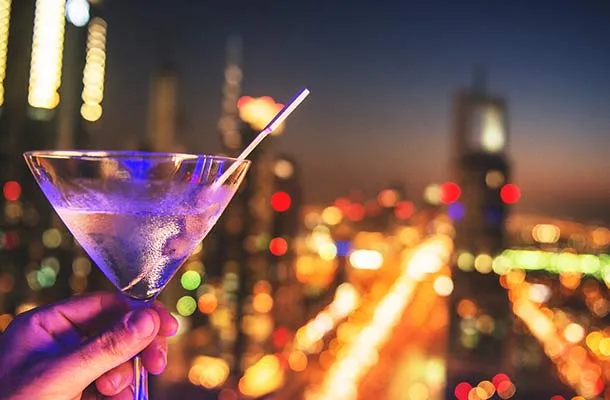
Dubai’s rules around alcohol have shifted significantly in recent years. The journey has moved from strict permitting to simpler access and now to new tax changes. If you are a tourist planning a visit or a resident stocking your home bar in 2025, you need to know what is new. You also need to know what has not changed. Let us break it all down for you.
Alcohol in Dubai — The Legal Landscape
Let’s get one thing straight. Alcohol is legal in Dubai. But it is not a free-for-all. Think of it like driving a car. You need a license, you have to follow the rules of the road, and you cannot just drive anywhere you want.
The legal framework has two main layers. There is the federal law for the entire UAE. Then there are the local laws for each emirate. Dubai has its own set of rules that operate within the broader national picture. This is why the experience can be completely different just a short drive away. For instance, in Sharjah, alcohol is largely prohibited. This contrast is important to remember. What is okay in Dubai might get you into serious trouble in a neighboring emirate.
The general principle in Dubai is simple. You can only drink in licensed outlets or in private homes. There are strict age limits and rules about where you can purchase it. The government has been modernizing these rules to support tourism and the large expat community. But they are always balanced with the local culture and traditions.
Key Recent Amendments (2020-2025)
The last five years have seen the most dramatic changes to Dubai’s alcohol laws in decades. It has been a journey of loosening some restrictions while tightening others, especially on the financial side.
Decriminalisation & Licence-Free Consumption (2020)
Back in November 2020, a huge shift happened. The UAE government announced a major amendment to the federal law. The core of this change was decriminalization.
Before this, the mere act of consuming alcohol without a license could, in theory, lead to criminal penalties. It was a law that was not always strictly enforced in certain contexts, but it was there. It hung over people’s heads.
The 2020 update changed that. It essentially stated that consuming alcohol in a permitted setting is no longer a criminal offense. This was a massive relief for residents and tourists alike. It meant that the primary reason for needing a license shifted. You no longer needed one just to have a drink in your own home or in a licensed hotel bar.
However, and this is a big however, the license is still very much relevant for the next part of the process: purchase and possession.
Licence Requirements for Purchase & Possession
So, if you do not need a license to drink at home, why get one? The answer is simple. You need a license to buy alcohol from official stores and to possess it in your home.
This is the key distinction that many people miss. Consumption is decriminalized. But the system for buying and possessing alcohol for private use still runs on a licensing framework. It is like how you do not need a license to watch TV, but you need one to own a broadcast receiver in some countries. The license governs the acquisition, not the final act.
The good news is the process has been simplified enormously. For residents, it is pretty straightforward.
You must be 21 or older. You use your Emirates ID. You can apply directly through the official retailers, MMI or African + Eastern. Often, the license itself is free or costs a very small fee. It is a administrative formality more than a rigorous screening process. I recently helped a friend apply through the African + Eastern website. The entire process took less than ten minutes. He received his digital license via email within a couple of days.
For tourists, it is even easier. You do not need to go through the full residential license application. Instead, when you go to a retail store like MMI, you just show your passport. The store will register your details once, and you can make purchases during your stay. It is a temporary permit system that works on the spot.
Drinking Age & Venue Restrictions
The legal drinking age in Dubai is clear and firm. You must be 21 years old to purchase and consume alcohol. This applies to everyone, residents and tourists alike. Do not expect to get served in a bar or buy from a store if you are under 21. They will check your ID.
Where you can drink is just as important as how old you are. The rules here have not changed. You can only consume alcohol in licensed venues or in private homes.
Licensed venues include hotel bars, restaurants, and clubs that have a permit. Your private home is also a permitted zone. This means your apartment or villa.
What is not permitted is public drinking. Full stop. This cannot be emphasized enough.
Important 2025 Tax Re-introduction
This is the big news for 2025. After a suspension that lasted for a few years, the Dubai government has reinstated the alcohol tax.
Effective January 1, 2025, a 30% sales tax is now applied to alcoholic beverages sold in Dubai.
Let us be clear about what this means. This is not a small change. It has a direct and immediate impact on your wallet.
Imagine a bottle of wine that used to cost 50 AED. With the new 30% tax, that same bottle now costs 65 AED. That is a significant jump. This tax applies at every point of sale: retail stores like MMI, bars, restaurants, and hotels.
The hospitality industry is definitely feeling this. Bars and restaurants have to pay more to stock their shelves. They, in turn, will have to increase their menu prices. So, your happy hour cocktail or your glass of house wine with dinner is going to cost more. There is no way around it. This move is widely seen as a way for the government to generate municipal revenue. It is a controlled way of managing the market while also contributing to the city’s budget.
What the Changes Mean for You (Residents & Tourists)
All these legal shifts can feel abstract. Let us make it practical. What do you actually need to do differently?
- For Residents
- You must be 21 or older.
- You need a license to buy alcohol from retail stores and to possess it in your home.
- Drinking in your home is legal and decriminalized.
- Your cost of living just went up. Budget for higher prices at the liquor store due to the 30% tax. That weekly or monthly shop is going to be noticeably more expensive.
- For Tourists
- You must be 21 or older.
- You do not need a full resident license. Just show your passport at registered retail stores.
- You can drink in your hotel room and in licensed hotel bars and restaurants.
- You must never drink in public. The beach, a park, your car, or walking down the street with a drink is illegal and can lead to fines or arrest.
- Your vacation just got a bit more expensive. Drinks at the hotel bar and any bottles you buy to take home will cost more because of the tax.
- General Cautions for Everyone
- Public drunkenness is a serious offense. Being visibly intoxicated in public can lead to arrest, fines, or even jail time. It is not worth the risk.
- Driving under the influence of alcohol is treated with zero tolerance. The penalties are severe, including heavy fines, immediate imprisonment, and deportation. If you plan to drink, plan not to drive. Use a taxi or ride-sharing service.
Where to Buy & Consume Alcohol Legally
Knowing the right places is half the battle. Let us map out the legal zones.
Where to Buy: Your main options are the two official retailers: MMI and African + Eastern. They have physical stores across Dubai. They also offer home delivery services. To use either, you must have your resident license or, if you are a tourist, your passport ready for registration. It is a controlled, but efficient, system.
Where to Consume: This list is short and specific.
- Licensed Venues: This includes the bar at your hotel, a restaurant with a liquor license, or a nightclub. If they are serving it, you are in a legal zone.
- Your Private Home: Your apartment or villa is a safe space to consume alcohol you have purchased legally.
- Your Hotel Room: For tourists, your hotel room is considered a private, temporary home.
I remember a friend who was visiting. He bought a beer from a convenience store and thought it would be fine to drink it on the public bench outside. I had to quickly explain that he was risking a fine. We went back to the hotel lobby instead. It is a simple switch that keeps you on the right side of the law.
Common Misconceptions & FAQs
There is a lot of confusion and old information floating around. Let us clear the air.
- “Is alcohol illegal in Dubai?” No. This is the biggest misconception. Alcohol is legal in Dubai under a regulated system.
- “Do I need a licence to drink?” This is a tricky one. You do not need a license specifically for the act of drinking in your home or a licensed bar. But you do need a license or permit to buy the alcohol you are drinking, which makes it practically essential for residents.
- “Can I drink in public or on the street?” No. Absolutely not. This is one of the most important rules. Public drinking is strictly prohibited and can lead to serious penalties.
- “Does the 30% tax apply to me?” Yes. If you are buying an alcoholic beverage in Dubai from January 1, 2025, you are paying the 30% tax. It is applied at the point of sale, so the price you see is the price you pay, tax included.
- “Is there a ban in Sharjah vs Dubai?” Yes. The difference is like night and day. Dubai has a regulated system. Sharjah is mostly dry. Do not bring alcohol into Sharjah, and do not assume the rules are the same.
Practical Tips for Compliance
Staying safe and legal is easy if you follow a few simple rules.
- Always carry your ID. Your Emirates ID for residents, your passport for tourists. You will need it for purchases and if you are ever asked by authorities.
- Drink only in the right places. Licensed venues and private homes. Nowhere else.
- Be discreet. Store your alcohol at home quietly. Avoid transporting large, obvious quantities, and be very careful if driving between emirates. Transporting alcohol through Sharjah, for example, is a major offense.
- Budget for the tax. The 30% increase is real. Factor it into your personal finances or vacation spending money.
- Use official channels. For residents, use the official retailer websites or apps like “LicenseDXB” to manage your license. For delivery, always order from MMI or African + Eastern.
Why the Changes? (Background)
You might be wondering, why all these changes? The overall direction towards decriminalization and simplification is part of a larger strategy.
Dubai is a global hub for business and tourism. Having very restrictive alcohol laws was seen by some as a barrier. By modernizing the regulations, the city becomes more attractive to international companies, skilled expatriates, and tourists. It is a signal that Dubai is open and progressive.
But this liberalization is carefully managed. The reintroduction of the 30% tax in 2025 is a perfect example of this balance. It allows the government to control consumption through pricing, much like many other countries do with “sin taxes” on tobacco and alcohol. It also generates significant revenue that can be used for public services. It is a smart way to give more freedom while also maintaining control and benefiting the public treasury.
Conclusion
Dubai’s alcohol laws are on a journey of modernization. The path has moved from strict control to more accessible frameworks, making life easier for residents and tourists. The landmark 2020 decriminalization update was a huge step forward.
Now, in 2025, the landscape is defined by the reinstatement of the 30% sales tax. This is the new reality. Prices are higher, but the fundamental rules of access have remained largely relaxed.
The bottom line is this. The laws are clear and manageable. Understand the difference between consumption, purchase, and possession. Know where you can and cannot drink. Respect the local culture and laws.
If you do that, you can enjoy a drink in Dubai without any worry. Just remember to drink responsibly and always in the right place.
Check your licence status or apply for one directly through the official LicenseDXB app or the MMI and African + Eastern websites to ensure you are always compliant.