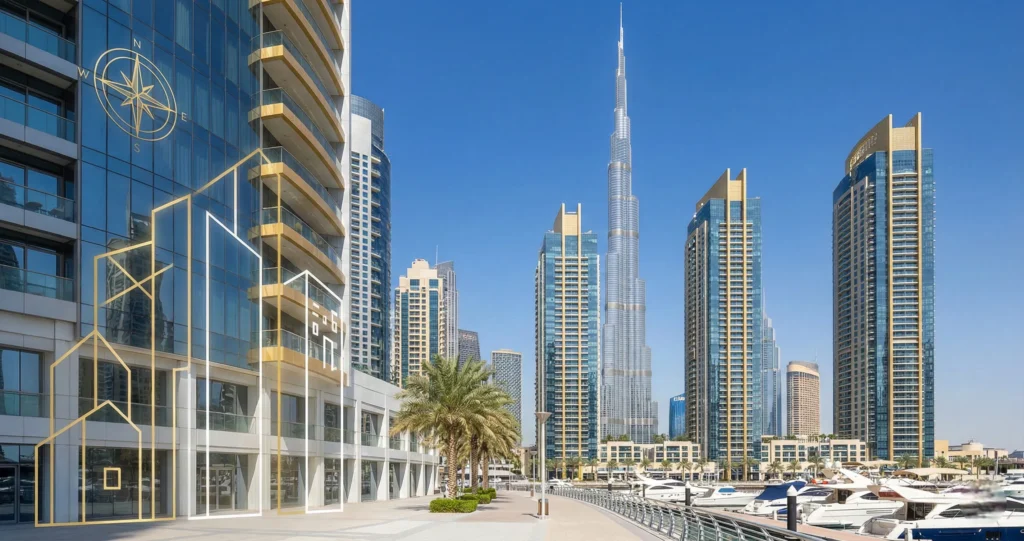

Dubai’s short-term rental (STR) market has entered a more regulated, mature, and quality-driven phase. While the city once felt like an open field for Airbnb hosts, 2025 has brought tighter licensing, clearer community permissions, and higher hospitality standards
But here’s the real question investors are asking:
Is Airbnb still profitable in Dubai after the new rules – or has the market become too restricted?
The short answer: Yes, it’s still profitable – but only if you follow the new model.
This guide breaks down the latest STR regulations, supply–demand trends, ROI shifts, best-performing areas, cost breakdowns, and the exact strategies you need to stay profitable in 2025.
Summary of Dubai’s New STR Regulations (2025)
Dubai introduced updated holiday-home regulations under the Department of Economy & Tourism (DET) to make STRs more premium, safe, and structured. Key updates include:
1. Mandatory Holiday Home Licence
Every unit listed on Airbnb must be licensed and renewed annually.
2. Building/Community Approval Required
STRs are allowed only in buildings where the HOA/management provides written NOC.
3. No Partial Renting
Most communities allow full-unit rentals only, not individual rooms.
4. Guest Safety Requirements
Fire extinguishers, smoke detectors, first-aid kits, and emergency signage are now compulsory.
5. Minimum Stay Rules in Certain Communities
Some buildings enforce 3–7 night minimums, encouraging longer bookings.
6. Tourism Dirham Fees
Applicable for the first 30 nights of each booking.
Bottom line: Regulations are stricter, not restrictive – they aim to eliminate low-quality listings and increase guest confidence.
Airbnb Supply vs Demand: What Actually Changed?
When new rules arrived:
Supply Dropped
- Smaller or unlicensed hosts exited the market
- Buildings tightened permissions
- Some investors shifted units back to long-term rental
Demand Increased
- Dubai crossed ~20M+ annual visitors (projected 2025)
- Longer stays from digital nomads and business travellers
- Families preferring serviced apartments over hotels
Result for Investors: Higher Occupancy
Fewer listings + strong tourism =
- Less competition
- Higher occupancy for compliant units
- Improved pricing power
Best Airbnb-Friendly Areas in Dubai (2025 Rankings)
These neighbourhoods consistently deliver strong occupancy, premium rates, and stable year-round demand.
1. Dubai Marina – Best Overall Occupancy
- Ideal for tourists and long stays
- Beach access, nightlife, marina lifestyle
- Strong 80–90% occupancy for quality listings
- Higher entry cost but reliable returns
2. Downtown Dubai – Highest Nightly Rates
- Near Burj Khalifa & Dubai Mall
- Premium business + luxury leisure demand
- Some towers are restrictive, but licensed ones perform exceptionally well
3. Jumeirah Village Circle (JVC) – Best Budget-Friendly Yield
- High demand for long-stay travellers
- Affordable entry prices
- Very strong ROI for 1BR/2BR units
- Perfect for remote workers, families, and digital nomads
4. JBR (Jumeirah Beach Residence) – Top Beachfront STR Zone
- Very high tourism demand
- Seasonal spikes
- Excellent for premium STR investors
- Slightly higher maintenance cost, but strong cash flow
ROI Comparison: Before vs After New Rules
| Period | Typical ROI | Notes |
| Before (Pre-2023) | 9–12% (inflated in many cases) | Many hosts ignored compliance/fees/true costs |
| After (2024–2025) | 7–10% realistic ROI | Higher quality standards, clearer expenses, and stronger occupancy |
Why ROI is still strong:
- Lower supply
- Better occupancy
- Longer average stays
- Higher guest expectation = fewer low-quality competitors
Dubai’s STR market is now more stable and predictable than before.
Cost Breakdown: How Much Does It Really Cost to Run an Airbnb in Dubai?
To calculate true profitability, include:
1. Licensing Costs
- DET permit fee
- Classification charges
- Annual renewal
- Tourism Dirham: AED 10–15/night (first 30 nights)
2. Operational Costs
- Cleaning & laundry
- Utilities (DEWA, Internet, Chiller)
- Furniture maintenance/replacement
- Building service charges
- Management company fee (typically 15–25%)
3. Setup Cost (One-Time)
- Furnishing
- Appliances
- Safety equipment
- Photography and listing optimisation
Airbnb Dubai profitability rises sharply for hosts who manage operations like a real business-not a hobby.
Strategies to Stay Highly Profitable Under New Rules
1. Target Longer Stays (10–30 Nights)
- Reduced cleaning
- Lower vacancy gaps
- Higher guest quality
- Especially effective in Marina, JVC, and Business Bay
2. Use Dynamic Pricing
Adjusting prices based on seasonality + demand =
- Higher occupancy in the low season
- Higher revenue in peak season
3. Work With Professional Management
Professional operators help with:
- Compliance
- Guest screening
- 24/7 support
- Automated pricing
- Higher ratings
- Lower operational losses
4. Furnish for Premium Guests
Well-furnished units get:
- Better reviews
- Higher nightly rates
- More long-term guests
- Fewer maintenance issues
5. Choose Buildings WITH STR Approvals
This avoids:
- Unexpected bans
- Licence rejection
- Resident complaints
- Disruptions that affect occupancy
Who Should Invest in Dubai’s STR Market in 2025?
Airbnb works BEST for:
✔ NRIs & global investors wanting higher yields
✔ Buyers who travel and want personal stay flexibility
✔ Investors comfortable with semi-managed or fully-managed operations
✔ Buyers in waterfront/tourist-centric communities
✔ People looking for annual returns + capital appreciation
Airbnb may NOT suit:
✘ Investors want a fully passive income
✘ Those uncomfortable with building permissions
✘ Buyers who want a steady, fixed income year-round
(They should choose long-term rentals instead.)
Conclusion: Is Airbnb Still Profitable in Dubai After the New Rules?
Absolutely, yes – but only for structured, compliant, professionally managed listings.
The market has shifted from “easy money” to smart money.
Dubai still enjoys:
- Rising tourist arrivals
- Strong demand for holiday homes
- High occupancy in premium areas
- Long-stay trends from digital nomads
- A regulated, predictable STR ecosystem
If you pick the right building, follow compliance, and manage your unit well, Airbnb Dubai profitability remains strong and competitive in 2025 and beyond.
Whenever you’re ready, MostlyProperty can help you choose STR-approved towers, calculate ROI, and build your Airbnb investment plan.
Read: Dubai’s Top Off-Plan Projects in 2025: Best Developers & ROI Breakdown
FAQs
Is Airbnb still profitable in Dubai after the 2025 regulation changes?
Yes. Airbnb remains profitable in 2025, especially in Marina, Downtown, JVC, and JBR. Profitability depends on licensing, community approvals, occupancy strategy, and professional management.
How much ROI can an Airbnb property make in Dubai in 2025?
Licensed STR units typically earn 7%–10% net ROI, depending on location, occupancy rate, and management efficiency. Premium buildings in Marina and Downtown achieve the highest yields.
How much does it cost to get an Airbnb licence in Dubai?
The total cost includes the DET holiday home permit, classification fees, annual renewals, and the Tourism Dirham. Charges vary by unit type but generally range between AED 1,500–2,500+ per year.
Do all buildings in Dubai allow Airbnb or short-term rentals?
No. STRs are allowed only in buildings with HOA/management approval. Some towers permit them freely, while others restrict or ban short-term rentals entirely.
Which areas give the highest occupancy rates for Airbnb in Dubai?
The strongest occupancy zones in 2025 are Dubai Marina, JBR, Downtown Dubai, Business Bay, and JVC. These areas attract tourists, business travellers, and long-stay guests.
Is it better to rent long-term or Airbnb your property in Dubai?
Airbnb usually provides higher returns (7–10% vs 4–6% for long-term rentals), but requires more management, furnishing, and compliance. Long-term suits passive investors; STR suits yield-focused buyers.
Can foreigners or NRIs run an Airbnb property in Dubai?
Yes. Foreign and NRI investors can legally own property in freehold zones and run STRs on Airbnb after obtaining the required DET licence and approvals.
What affects Airbnb’s profitability the most in Dubai?
Key factors include:
Building STR approval
Unit furnishing quality
Pricing strategy
Guest reviews
Seasonality
Occupancy demand
Professional management
Location
What is the minimum stay requirement for Airbnb in Dubai?
Many communities enforce 3–7 night minimum stays to reduce guest turnover. Some luxury towers require longer minimums during peak seasons.
Is Dubai’s Airbnb market too saturated in 2025?
No. Supply has reduced due to new regulations, but demand continues to rise. This has improved occupancy for licensed, well-managed listings and lowered competition from low-quality units.