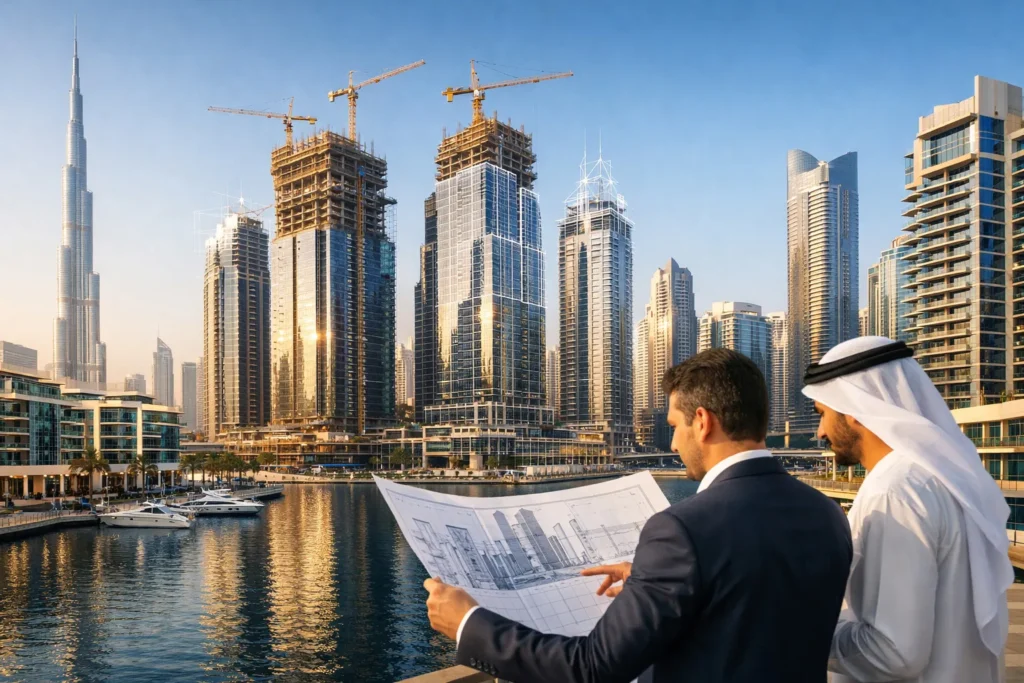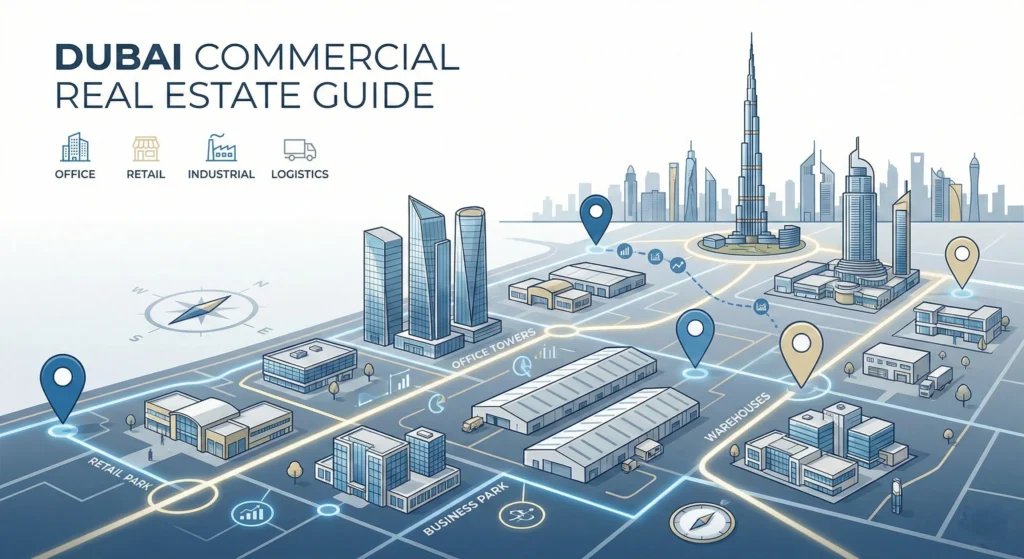

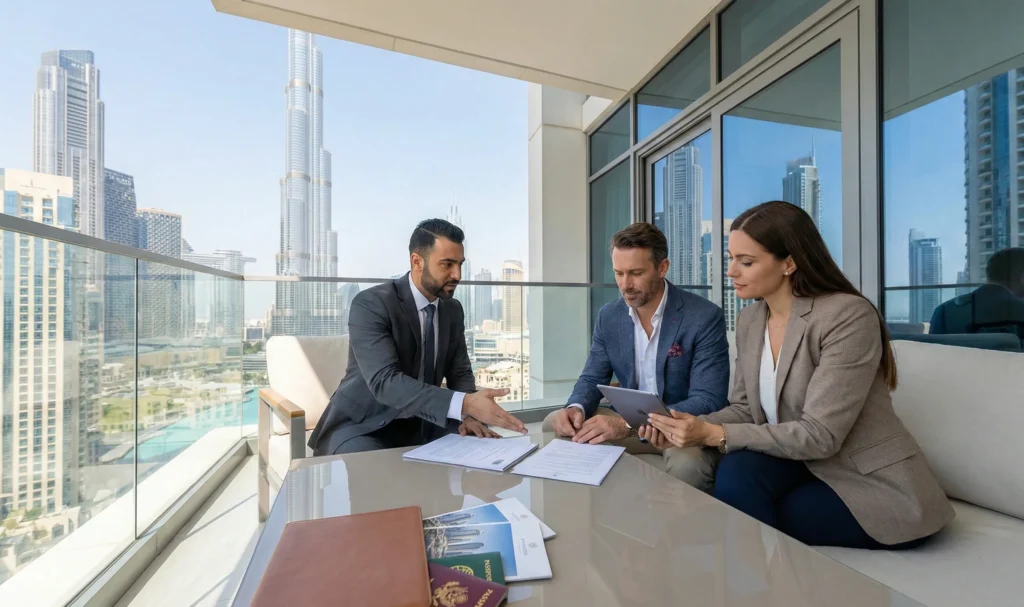
Buying property in Dubai has become a top choice for foreign investors. The reasons are clear: high rental yields, tax-free income, and strong legal protection. Whether you’re exploring the idea of buying property in Dubai as a foreigner or curious about zero-down payment property in Dubai, this guide walks you through everything. We’ll cover the full process, potential risks, and what you need to know before putting your money down.
Dubai’s real estate market has grown into one of the most attractive destinations for international property buyers. The city offers something unique. You don’t just get a piece of real estate. You get access to a world-class lifestyle, business opportunities, and the chance to live in one of the most dynamic cities on earth.
But here’s the thing. Buying property anywhere requires careful thought. Dubai is no different. You need to understand the rules, the process, and what can go wrong. That’s what this guide is all about.
Why Foreign Investors Are Buying Property in Dubai
Let’s start with the basics. Why are so many people from around the world rushing to buy property in Dubai? The answer isn’t just about luxury towers and beach views. There are solid, practical reasons.
First, 100% foreign ownership in freehold areas. This is huge. Many countries don’t let foreigners own property outright. In Dubai, you can. Freehold zones allow you to buy and own property completely. No local partner needed. No weird ownership structures. It’s yours.
Second, there’s no property tax. Read that again. No annual property tax. No capital gains tax when you sell. No inheritance tax when you pass it on. Compare that to most Western countries, where property taxes eat into your profits year after year. In Dubai, what you earn stays with you.
Third, the rental demand is strong. Dubai attracts millions of tourists and thousands of expat workers every year. These people need places to stay. If you own a well-located property, finding tenants isn’t hard. Rental yields in Dubai often range between 5% to 8% annually. That’s higher than most major cities globally.
Fourth, you can get long-term residence visa options. Buy a property worth a certain amount, and you become eligible for a residence visa. This gives you the right to live in Dubai without needing a job sponsor. For many investors, this alone makes the purchase worthwhile.
Now, is it a good time to buy property in Dubai? Market conditions matter. Dubai’s property market has had its ups and downs. After the Expo 2020 event, the city saw renewed interest. Infrastructure projects continue to roll out. New metro lines, entertainment zones, and business hubs keep appearing. These developments support long-term property values.
But timing is personal. If you’re looking for rental income, almost any stable period works. If you’re betting on price appreciation, you need to watch market trends more closely. The key is doing your homework before jumping in.
Who Can Buy Property in Dubai
Here’s the good news: most foreigners can buy property in Dubai. There are very few restrictions. But you need to understand the difference between freehold and leasehold.
Freehold areas allow full ownership. You own the property and the land it sits on. Forever. Popular freehold zones include Dubai Marina, Downtown Dubai, Palm Jumeirah, Jumeirah Lake Towers, and Dubai Hills Estate. These areas were specifically opened to foreign buyers.
Leasehold areas are different. Here, you get the right to use the property for a fixed period. Usually 99 years. When that period ends, ownership reverts to the landowner. Leasehold properties are less common for residential buyers now. Most new developments offer freehold.
So who exactly can buy? Citizens from most countries can purchase property in freehold areas. There are no nationality blacklists that we know of. Whether you’re from the US, UK, India, Pakistan, China, or anywhere else, the process is the same.
You don’t need residency to buy. You can be sitting in your home country and complete the entire purchase remotely. However, owning property worth above a certain threshold makes you eligible to apply for a residence visa later.
When buying property in Dubai as a foreigner, you follow the same legal process as UAE nationals buying in freehold zones. The Dubai Land Department treats everyone equally. Your rights as a property owner are protected under UAE law.
Buying Property in Dubai Process (Step-by-Step)
Let’s break down the actual buying property in Dubai. It’s more straightforward than you might think. But each step matters.
Step 1: Choose the Right Location
Location drives everything. Rental income, resale value, lifestyle quality. All tied to where you buy.
Popular areas include Dubai Marina for waterfront living and nightlife. Downtown Dubai for prestige and proximity to Burj Khalifa. Palm Jumeirah for beachfront luxury. Jumeirah Village Circle for family-friendly, affordable options. Business Bay for investors targeting working professionals.
Do your research. Visit the areas if possible. Check the distance to metro stations, schools, hospitals, and shopping centres. A great-looking apartment in a poorly connected area won’t rent easily.
Step 2: Select Property Type
You have two main choices: off-plan or ready property.
Off-plan properties are still under construction. You buy based on plans and promises. The advantage? Lower prices. Developers offer payment plans that spread the cost over the construction period. The downside? Delays can happen. You might wait longer than expected for handover.
Ready properties are completed and available immediately. You can see exactly what you’re buying. Move in right away or start renting immediately. The price is usually higher than off-plan, but there’s no waiting game.
Step 3: Sign Sale Agreement (MOU)
Found the right property? Time to formalise your interest. You’ll sign a Memorandum of Understanding (MOU) or Sale and Purchase Agreement (SPA). This document outlines the terms: price, payment schedule, handover date, and other conditions.
Read everything carefully. If English isn’t your first language, get a translator. Don’t sign what you don’t understand. It’s also smart to have a lawyer review the agreement before you commit.
Step 4: Pay Deposit & Fees
After signing, you pay a deposit. For ready properties, this is typically 10% of the purchase price. For off-plan properties, it might start at 5% to 10%, with the rest spread across construction milestones.
You’ll also pay several fees:
Dubai Land Department (DLD) registration fee: 4% of property value (usually split between buyer and seller, so you pay 2%)
Real estate agent commission: typically 2% of property value
Mortgage registration fee: if taking a loan
Trustee office fee: for off-plan properties
Admin charges: various small fees
Budget for about 7% to 10% of the property price in total fees and charges.
Step 5: Property Registration
The final step happens at the Dubai Land Department. Both buyer and seller (or developer) attend. You’ll present the required documents: passport copies, entry stamps, No Objection Certificate (NOC) from the developer, and payment receipts.
The DLD reviews everything. If all is in order, they register the property in your name and issue a Title Deed. This is your legal proof of ownership. Keep it safe.
For off-plan properties, you get the Title Deed after construction completes and you take handover. Until then, you’ll have interim registration documents.
Things to Know Before Buying Property in Dubai
Before you sign any contract, there are critical things to know about buying property in Dubai. These can save you from expensive surprises.
Service charges are annual fees you pay to maintain common areas. Gyms, pools, lobbies, security, landscaping. All covered by service charges. The amount varies wildly. Could be AED 5 per square foot or AED 25 per square foot. That’s a massive difference in a 1,000-square-foot apartment. Always ask about service charges upfront.
Developer reputation matters enormously. Stick with established names: Emaar, Dubai Properties, Meraas, Nakheel, Azizi, and Damac. These companies have track records. They deliver projects on time (mostly). Unknown developers might offer tempting discounts, but the risk of delays or quality issues goes up.
ROI expectations need to be realistic. Don’t believe wild promises of 12% annual returns. Most properties yield 5% to 8% in rental income. Capital appreciation varies. Some years, the market rises 10%. Other years it stays flat or dips. Plan for the long term, not quick flips.
Legal verification is non-negotiable. Before paying anything, verify that the property is registered with the DLD. Check that the seller or developer actually owns what they’re selling. This is where hiring a property lawyer helps. They can run searches and confirm everything is legitimate.
Also, understand the payment plan thoroughly. Some developers offer attractive plans that balloon at the end. You might pay small amounts during construction, then a huge final payment at handover. Make sure you can afford that final chunk.
Check for any existing liens or disputes on the property. The last thing you want is to buy an apartment that’s tied up in legal problems.
Buying Property in Dubai with a Mortgage
Many foreign investors use financing. Buying property in Dubai with a mortgage is common and relatively accessible. But there are rules.
Mortgage eligibility for foreigners depends on several factors. You need proof of income. Banks want to see salary certificates, bank statements, and employment contracts. Self-employed buyers need audited accounts and tax returns.
Your age matters too. Most banks lend only if the mortgage will be fully repaid before you turn 65 or 70. Younger buyers get longer terms.
Loan-to-value ratio is usually 75% for properties under AED 5 million. So you need a 25% down payment. For properties above AED 5 million, the LTV drops to 65%, meaning a 35% down payment. First-time buyers might face stricter rules.
Foreign buyers often get similar terms to UAE residents. Interest rates vary between 3.5% to 5.5% depending on the bank and your credit profile. Some banks offer fixed rates for initial years, then switch to variable.
Required documents include:
- Passport copy with residence visa (if you have one)
- Bank statements for the past six months
- Salary certificate or proof of income
- Property valuation report
- Sale agreement
- Passport-size photographs
The mortgage process takes two to four weeks. Start early. Get pre-approval before making offers. This shows sellers you’re serious and financially capable.
One important point: your monthly mortgage payment, plus any other loans, shouldn’t exceed 50% of your monthly income. Banks enforce this debt-burden ratio strictly.
Zero Down Payment Property in Dubai
The phrase “zero down payment property in Dubai” gets thrown around a lot. It sounds amazing. Buy property with no upfront cash? Not quite.
Here’s the reality. Zero down payment is marketing language. What it actually means is flexible payment plans. Developers structure payments so you don’t need to pay the full down payment immediately. Instead, you pay small amounts over time.
For example, a developer might offer a 5% payment at booking, then 5% after six months, then 5% after a year. This spreads the traditional 10% to 20% down payment across the construction period. Technically, you’re still paying a down payment. Just in instalments.
Some developers offer post-handover payment plans. You move in (or rent out) the property and continue paying the developer monthly for several years. This can feel like zero down payment because you’re not getting a bank mortgage. But you’re locked into a payment contract with the developer.
The catch? These flexible plans often come with higher overall prices. The developer builds the cost of financing into the property price. You might pay 10% more than someone who pays cash up front.
How to buy property in Dubai without a down payment is really about finding these developer payment plans. They’re most common with off-plan projects. Ready properties rarely offer such terms.
Be cautious. Read the fine print. Some plans have penalties if you miss a payment. Others might have balloon payments at the end. Make sure you can afford the full commitment, not just the initial low payments.
Also, understand that with developer payment plans, you don’t fully own the property until you complete all payments. The developer holds significant rights until then.
How to Buy Property in Dubai from Pakistan
Many Pakistani nationals are interested in Dubai real estate. The good news? The process is the same as for any other foreigner. But there are specific considerations for how to buy property in Dubai from Pakistan.
The legal process is straightforward. Pakistani citizens can buy property in freehold areas without restrictions. No special permissions needed. The Dubai government welcomes Pakistani investors.
Money transfer rules require attention. Pakistan has foreign exchange regulations. You need to transfer funds through proper banking channels. The State Bank of Pakistan allows foreign investments, but you must declare and document everything.
Use a reputable bank for transfers. Keep all receipts and documentation. This protects you both under Pakistani law and UAE law. It also helps if you want to repatriate funds later.
Documents required include your Pakistani passport, proof of funds, and the standard property purchase documents. If you’re taking a mortgage from a UAE bank, they’ll ask for income verification from Pakistan.
Some Pakistani banks have branches in Dubai. They understand the cross-border requirements and can facilitate the process more smoothly.
One tip: consider opening a UAE bank account even before buying. This makes transactions easier and provides a local banking relationship that helps with mortgages.
Pakistani investors often buy in areas like International City, Discovery Gardens, and Jumeirah Village Circle. These offer good value and strong rental yields. But don’t limit yourself. Explore all options.
Risks of Buying Property in Dubai
Let’s talk honestly about the risks of buying property in Dubai. Every investment has downsides. Real estate in Dubai is no exception.
Market fluctuations happen. Dubai’s property market has seen boom-and-bust cycles. Prices soared in the mid-2000s, crashed in 2008, recovered slowly, then surged again after 2020. Predicting the next move is impossible. If you buy at a peak, you might wait years to see appreciation. Or prices might drop, leaving you underwater on your mortgage.
Delayed handovers frustrate off-plan buyers. A project scheduled for 2024 might not be completed until 2025 or 2026. This delays your rental income. It ties up your money longer than planned. While major developers usually deliver eventually, delays are common in the industry.
Service charge increases can shock new owners. Your first year might cost AED 8,000 in service charges. By year three, it’s AED 12,000. Buildings age. Maintenance costs rise. Not all developers or homeowner associations manage budgets well. These increases eat into your rental profit.
Liquidity risks are real. Property isn’t like stocks. You can’t sell instantly. If you need cash urgently, you might struggle to find a buyer quickly. Or you might have to drop the price significantly to attract interest. Dubai’s market can be illiquid during downturns.
Oversupply concerns pop up periodically. When too many new units hit the market at once, rental rates drop. Vacancy periods increase. Your expected 7% yield might become 4% or even zero if you can’t find tenants.
Legal disputes can arise with developers or neighbours. While UAE law protects buyers, resolving disputes takes time and money. Language barriers and unfamiliar legal systems add complexity for foreign investors.
Currency risk affects international buyers. If you earn in Pakistani rupees, Indian rupees, or Egyptian pounds, but your property costs are in UAE dirhams (pegged to the US dollar), currency fluctuations impact your returns.
The solution? Buy within your budget. Don’t stretch financially. Choose established developers and prime locations. Assume rental yields will be lower than advertised. Plan for price stagnation, not growth. If the investment still makes sense under pessimistic assumptions, go ahead.
Is It a Good Time to Buy Property in Dubai?
Everyone asks this: is it a good time to buy property in Dubai? The answer depends on your situation and goals.
Market trends show Dubai rebounded strongly after 2020. The Expo 2020 event (held in 2021-2022 due to COVID delays) brought attention and investment. Prices in many areas increased 15% to 30% over two years. That growth has slowed recently, but the market remains relatively strong.
The Expo legacy includes new infrastructure. The site itself became a permanent district. New roads, metro extensions, and business zones emerged. These improvements support long-term value.
Infrastructure growth continues across Dubai. The city constantly builds. New residential communities, commercial towers, and entertainment destinations. Projects like Bluewaters Island, Dubai Creek Harbour, and the expansion of Al Maktoum International Airport point to growth.
Interest rates matter too. When rates are low, mortgages are cheap. Buyers can afford more. When rates rise, the opposite happens. In 2024-2025, rates have been moderate but not as low as in previous years.
Here’s a framework for deciding:
Buy now if:
You have a stable income and can afford the commitment
You’re planning long-term (5+ years)
You’ve found a property in a prime location at a fair price
Rental yield meets your investment goals
You’re comfortable with market risks
Wait if:
You’re not financially stable
You’re hoping for quick profits through flipping
Prices seem inflated in your target area
You haven’t researched thoroughly
You’re following hype rather than fundamentals
Timing the market perfectly is impossible. A decent property in a good location bought at a reasonable price will likely perform well over time. Focus on fundamentals, not trying to catch the absolute bottom or top.
FAQs
Q1. Can foreigners buy property in Dubai without residency?
Yes, residency is not mandatory. You can buy property as a non-resident foreigner. However, buying property worth above a certain amount (currently around AED 750,000) makes you eligible to apply for a residence visa afterward.
Q2. Is mortgage available for foreign investors in Dubai?
Yes, subject to bank eligibility. You’ll need proof of income, good credit history, and typically a 25% to 35% down payment. Loan terms and interest rates vary by bank.
Q3. Are zero down payment properties really zero?
Usually no. They’re structured through payment plans where you pay in installments over time. True zero down payment is rare. Read the terms carefully to understand what you’re actually committing to.
Q4. Is Dubai property safe for long-term investment?
Dubai has strong investor protection laws. The RERA (Real Estate Regulatory Agency) oversees the market. However, like any investment, risks exist. Do thorough research and buy in established areas with reputable developers.
Q5. What areas offer the best rental yields?
Areas like Jumeirah Village Circle, International City, Discovery Gardens, and Dubai Sports City typically offer higher rental yields (6% to 8%) due to lower purchase prices. Premium areas like Downtown Dubai or Palm Jumeirah have lower yields (4% to 6%) but potentially better capital appreciation.
Q6. How long does the buying process take?
For ready properties with cash payment, as little as one week. With a mortgage, two to four weeks. For off-plan properties, you sign early but wait months or years for construction to complete before taking ownership.
Q7. Can I sell my Dubai property easily?
Liquidity varies with market conditions and property type. Prime locations in strong markets sell faster. During downturns, selling might take months and require price reductions.
Conclusion
Buying property in Dubai offers strong returns for foreign investors when done with proper research. The city provides unique advantages: tax-free income, full ownership rights, strong rental demand, and potential for capital appreciation.
Understanding the buying property in Dubai process prevents costly mistakes. From choosing the right location and property type to navigating mortgage options and payment plans, each step requires careful attention.
The risks of buying property in Dubai are real but manageable. Market fluctuations, service charge increases, and potential delays require you to invest conservatively. Don’t overleverage. Choose established developers. Focus on prime locations.
Whether you’re exploring zero down payment property in Dubai or traditional financing, the key is understanding what you’re actually signing up for. Read contracts. Ask questions. Verify everything.
Dubai’s real estate market continues evolving. New regulations protect buyers better than ever before. The city’s vision for growth remains ambitious. For investors who do their homework and invest wisely, Dubai property can deliver both steady income and long-term wealth building.
Start with clear goals. Know your budget. Research thoroughly. And don’t rush. The right property will be worth the patient, careful approach.