

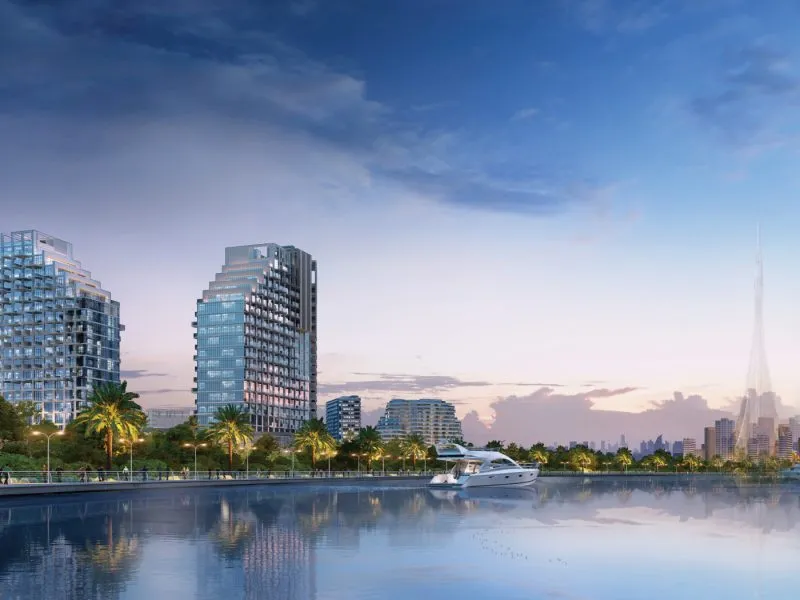
Imagine a city within a city. A place where world-class hospitals stand beside sleek office towers. Where medical pioneers and health tech innovators work side-by-side. This is Dubai Healthcare City (DHCC). It is more than just a location. It is the heart of healthcare and wellness in the region.
If you are an investor, a doctor starting a clinic, or a company in the health business, finding the right building here is your first big step. The wrong choice can mean poor visibility and difficult access for patients. The right one can put you at the center of it all.
Let us walk you through the seven top buildings that make DHCC tick. We will look at what makes each one special, who they are best for, and what you need to know before you decide.
How We Selected the Top Buildings
We did not just pick these buildings at random. We used a clear set of rules to make our list. We wanted to give you a useful and honest guide.
Our main criteria were:
- Location and Connectivity: Is the building easy to find? Is it close to the metro and main roads?
- Tenant Mix: Does it have a strong mix of medical and commercial tenants? A vibrant community matters.
- Building Quality: Does it offer modern amenities, good parking, and well-designed spaces?
- Investment Appeal: Is it known for stable tenants and good value? We considered both rental potential and long-term growth.
These buildings represent the best of what DHCC has to offer.
Building Profiles
Here is a closer look at the seven buildings that stand out in Dubai Healthcare City.
1. Al Razi Medical Complex, Block F
Overview: Think of Al Razi as the anchor of the community. It is not a single office tower. It is a flagship medical complex dedicated entirely to multi-specialty care. Walking through its halls, you will find everything from outpatient clinics and diagnostic labs to specialized treatment centers. It is a place built for one purpose: healing.
Key Features:
- A purpose-built medical facility with high-ceiling lobbies.
- Direct access to dedicated visitor parking, a huge plus for patients.
- Ground-floor retail spaces like pharmacies and cafes for patient convenience.
- A reputation for housing established and respected medical groups.
Investment and Tenant Appeal: This is the ideal spot for established medical professionals. If you are a surgeon, a specialized doctor, or run a diagnostic lab, this complex gives you instant credibility. The tenant base is very stable, often signing long-term leases. It is a solid, dependable choice.
The Bottom Line:
- Pros: Strong healthcare brand, high patient footfall, purpose-built for medical use.
- Cons: Fewer pure office spaces available. It is primarily for clinical use, so it might not suit a health-tech startup with no patient facing needs.
2. Building 33 (DHCC Phase 2)
Overview: Building 33 is a major commercial landmark in the newer part of DHCC, known as Phase 2. It is a tall, impressive tower filled with high-rise office floors. The design is modern and efficient, attracting a diverse group of businesses that want to be close to the action.
Key Features:
- A dual-core design means more elevators and less waiting time.
- Excellent proximity to the Dubai Healthcare City Metro Station.
- Large, flexible floor-plates that can be adapted for different office layouts.
Investment and Tenant Appeal: This building is perfect for companies that thrive on synergy. Think health insurance firms, medical device suppliers, or health IT companies. They can be right next door to their hospital clients. The location commands attention and makes a strong statement.
The Bottom Line:
- Pros: Prime location, modern infrastructure, great for corporate branding.
- Cons: Rental prices are at a premium compared to some older buildings. You pay for the prestige.
3. Building 39 (DHCC Phase 2)
Overview: If Building 33 is the corporate giant, Building 39 is the agile specialist. It is a boutique tower designed with smaller tenants in mind. The units here are often in the 1,000 to 2,000 square foot range. It feels more personal and manageable.
Key Features:
- Flexible and smaller floor-plates perfect for growing businesses.
- The environment is co-working and collaboration friendly.
- Often has options for renting meeting rooms by the hour.
Investment and Tenant Appeal: This is your go-to building if you are a mid-sized healthcare business starting your MENA operations. It is also great for specialists opening their first clinic. The lower entry cost and flexible spaces reduce your risk. It is easier to get started here.
The Bottom Line:
- Pros: More affordable, smaller units, ideal for new market entrants.
- Cons: It does not have the grand scale of the larger towers. The area around it might see future redevelopment.
4. Building 40 (DHCC Phase 2)
Overview: Building 40 is the new kid on the block. It is a recently delivered tower that brings the latest in smart-building technology to DHCC. With 18 floors above ground, it is designed for the future of healthcare business.
Key Features:
- Smart Building Management Systems (BMS) for efficiency.
- EV charging stations in the parking lot.
- A wellness roof-deck for tenants to use.
- Direct physical links to other hospital clusters.
Investment and Tenant Appeal: This building calls out to medical-tech startups and satellite offices of global healthcare groups. If your company values sustainability, technology, and modern design, Building 40 should be on your shortlist. It is built for the next generation of healthcare.
The Bottom Line:
- Pros: State-of-the-art facilities, future-proof design, attractive to innovative companies.
- Cons: Being new, it has higher rental rates. Some traditional medical tenants might prefer the established feel of older buildings.
5. Lakeside Tower A (DHCC)
Overview: Lakeside Tower A is all about prestige. It is one of the landmark towers in DHCC, offering stunning views over the peaceful internal lake. From the moment you walk into the high-end lobby, you know this is a premium address.
Key Features:
- Breathtaking panoramic views of the DHCC lake.
- A large podium terrace for events or breaks.
- Direct access to hospital lobbies and premium amenities.
- Built with high-quality, premium specifications.
Investment and Tenant Appeal: This is for the prestige tenant. If you are the global headquarters of a healthcare company or a top-tier consultancy, this building makes a powerful statement. It tells your clients and partners that you have arrived.
The Bottom Line:
- Pros: Premium address, excellent views, high-profile tenant mix.
- Cons: The cost is at the top of the market. Available units can be hard to find because tenants tend to stay for a long time.
6. Lakeside Tower D (DHCC)
Overview: Think of Lakeside Tower D as the slightly more accessible sibling of Tower A. It shares the same high-quality construction and lakeside location but often has more readily available and flexible spaces. It offers a fantastic balance of quality and opportunity.
Key Features:
- High-quality specification very similar to Tower A.
- An elevated retail podium with food and beverage outlets.
- An excellent ratio of parking spaces to tenants.
- Beautiful lake views from many of the offices.
Investment and Tenant Appeal: This tower is strong for service-oriented healthcare companies. It is a great fit for wellness centers, rehabilitation units, and medical suppliers who want a premium image without the absolute top-tier price of Tower A. The flexibility is a key selling point.
The Bottom Line:
- Pros: Great balance of quality and value, good occupancy flexibility, excellent amenities.
- Cons: The views and prestige are slightly less pronounced than in Tower A.
7. Centrium Tower 4 (DHCC)
Overview: The Centrium is a multi-tower complex, and Tower 4 is a key part of its commercial leasing strategy. It is a building that feels connected. Tenants get to use shared amenities across the entire complex, creating a campus-like feel.
Key Features:
- Access to shared facilities like a conference center and cafeterias.
- Flexible lease structures can be negotiated.
- A mix of pure office spaces and medical suites.
Investment and Tenant Appeal: This building is ideal for larger corporates that need to house multiple teams or departments. If you need an office for your admin staff and a clinic for your medical team in the same complex, Centrium Tower 4 can make that happen. It is about clustering your operations efficiently.
The Bottom Line:
- Pros: Campus-style amenities, good for larger teams, mixed-use environment.
- Cons: The floor sizes can be large for very small tenants. Some parts of the complex may feel dated and could use refurbishment.
How to Choose the Right Building for You
With all these options, how do you pick? It is like choosing a new home. You need to think about your daily life and what you really need.
Ask yourself these questions:
- What is your business type? Are you a clinical operator who needs medical gas lines and room for patients? Or are you a health-tech firm that just needs a modern office? Your core function decides which buildings are even possible.
- How much space do you need? Be realistic. A 600 sq ft unit might be a perfect start for a solo practitioner. A 10,000 sq ft floorplate is for an established corporation. Do not overstretch your budget on space you will not use.
- Is visibility important? Does your business rely on walk-in patients? Then a ground-floor unit with good frontage is crucial. If not, a higher floor with a lake view might be a better perk for your employees.
- Check the practicalities. What is the parking situation for your staff and clients? Is the building easy to find? Does it have a reliable power backup? These things seem small until they become a daily problem.
- Understand the lease terms. Medical leases are often longer, like 5 to 10 years. This is because fitting out a clinic is expensive. Commercial office leases are typically shorter, around 3 years. Know what you are signing up for.
I once spoke with a dentist who was so excited about a cheap unit in a back alley building. The price was right. But then we realized his patients would have to walk ten minutes from the parking. He chose a slightly more expensive unit with easy access. His patient retention was much higher. The extra cost was worth it.
Market Snapshot & Investment Insights (2025)
The market in DHCC is dynamic. Here is what you need to know for 2025.
The big news is a major expansion. The Dubai Healthcare City Authority has announced a AED 1.3 billion investment to grow the campus between 2025 and 2027. This tells you one thing: they are doubling down on its success. This is a strong signal for future growth and stability.
On the ground, this is what the numbers look like:
- The average rent for a good quality Grade-A office in DHCC is between AED 70 and AED 95 per square foot per year.
- Rents for clinic spaces can be higher, depending on the fit-out and location within the building.
- The vacancy rate for the top buildings we have listed is consistently low, often below 8%. Good spaces do not stay empty for long.
For investors, there is a key point to remember. Medical tenants tend to stay put. They sign long leases because moving a clinic is a huge hassle. This means a building filled with medical practices often has very stable cash flow. It is a less volatile investment compared to some pure commercial office buildings.
Frequently Asked Questions
Can non-medical businesses lease in DHCC?
Yes, absolutely. While the focus is health and wellness, many related businesses thrive here. This includes health-tech companies, biotech firms, medical insurance providers, and corporate offices for healthcare groups.
Where is Dubai Healthcare City located?
It is in a central part of Dubai, in the Al Jaddaf and Umm Hurair 2 area. It is very well-connected, sitting right on the Green Line of the Dubai Metro (Dubai Healthcare City Station) and with easy access to Sheikh Zayed Road.
Are these buildings freehold for investors?
Some buildings and units within DHCC are indeed freehold, allowing non-UAE nationals to own property. However, this is not universal. You must confirm the ownership structure for the specific unit you are interested in with the building management and the Dubai Land Department.
What should I check before leasing a clinic floor?
Do not just look at the rent. Ask about zoning approvals for clinical use. Understand the process and cost for getting your fit-out plans approved. Check if the building has the necessary infrastructure like medical gas lines, oversized elevators for equipment, and emergency power backup.
Are there any upcoming projects in DHCC?
Yes. As mentioned, a major AED 1.3 billion expansion project is planned to start in late 2025. This will add new infrastructure and likely new buildings to the community, further solidifying its status as a leading hub.
Also Read: Property Management Companies That Accept Section 8 in Georgia
Also Read: Property Management Broker License – Is That Series 7?
Also Read: Top 10 Student Housing Property Management Software




One Response