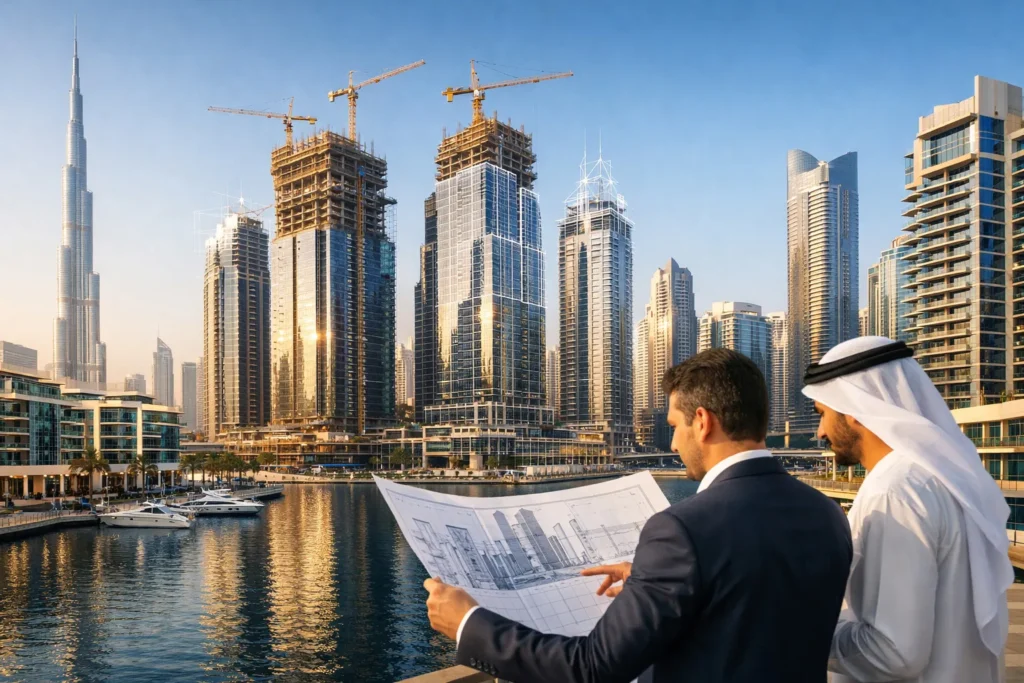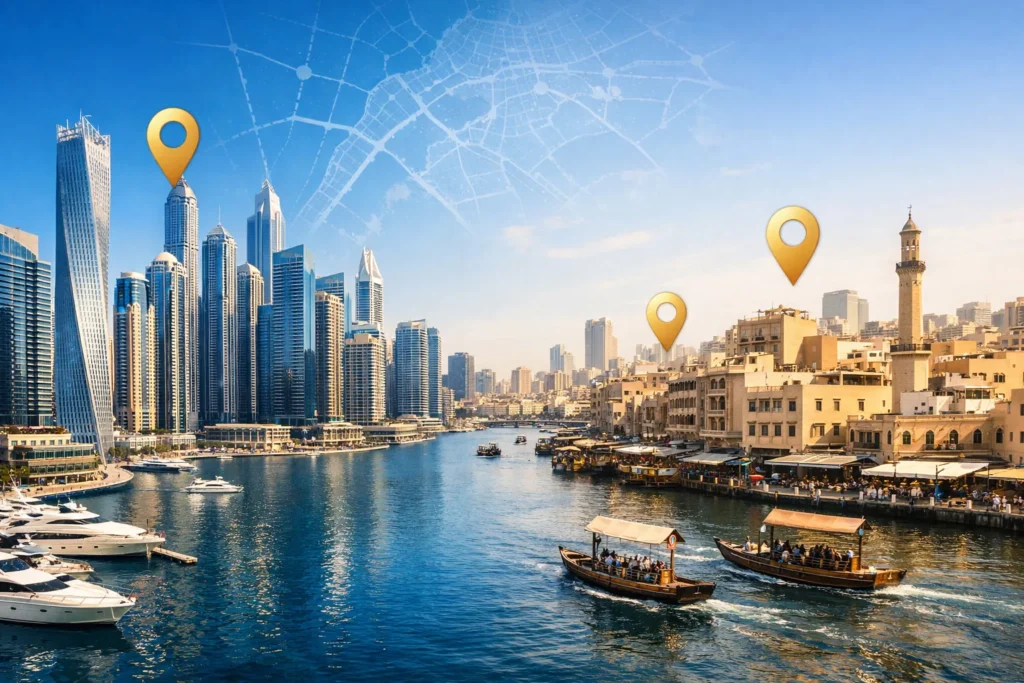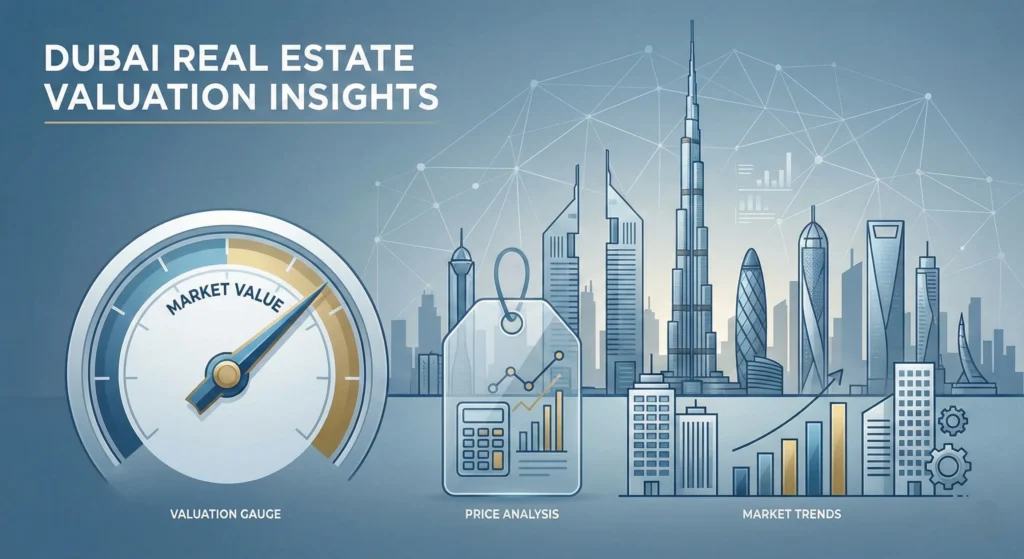

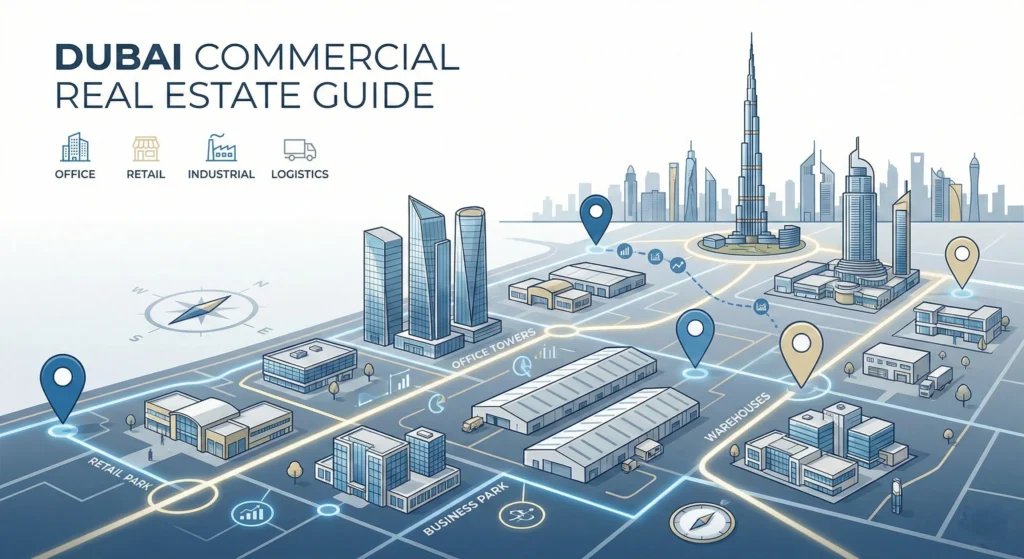
Dubai stands as one of the world’s most dynamic business hubs. The city attracts entrepreneurs, multinational corporations, and investors from every corner of the globe. At the heart of this economic growth lies commercial real estate in Dubai. Whether you’re planning to open an office, launch a retail store, or invest in income-generating properties, understanding the commercial property landscape is essential. This guide walks you through everything you need to know about Dubai’s commercial real estate sector. From property types to market trends, we’ll cover the fundamentals that help businesses and investors make informed decisions in this thriving market.
What Is Commercial Real Estate in Dubai?
Commercial real estate refers to properties used primarily for business purposes rather than residential living. These properties generate income through rent or capital appreciation. Think of buildings where companies operate, shops sell products, or warehouses store goods.
The key difference between commercial and residential real estate is simple:
- Residential properties are homes where people live
- Commercial properties are spaces where business happens
In Dubai, the commercial real estate ecosystem is well-developed and regulated. The government has created clear frameworks that protect buyers, sellers, tenants, and investors. Properties must be registered with the Dubai Land Department, which oversees all real estate transactions in the emirate. Transactions follow standardized procedures that ensure transparency and legal compliance.
Dubai’s commercial property market includes everything from small retail units in shopping centers to entire office towers in business districts. The sector operates under specific laws that differ from residential real estate regulations. For example:
- Commercial lease agreements typically run longer than residential ones (usually 3-5 years minimum)
- They often include different terms regarding maintenance responsibilities
- Modification rights and renewal options follow distinct rules
- Security deposits and payment structures vary significantly
Understanding these distinctions helps you navigate the market more effectively. When you know what qualifies as commercial real estate, you can better assess opportunities and avoid confusion during transactions. If you’re also exploring residential options, check out our guide on real estate investment opportunities in Dubai to compare both sectors.
Types of Commercial Real Estate in Dubai
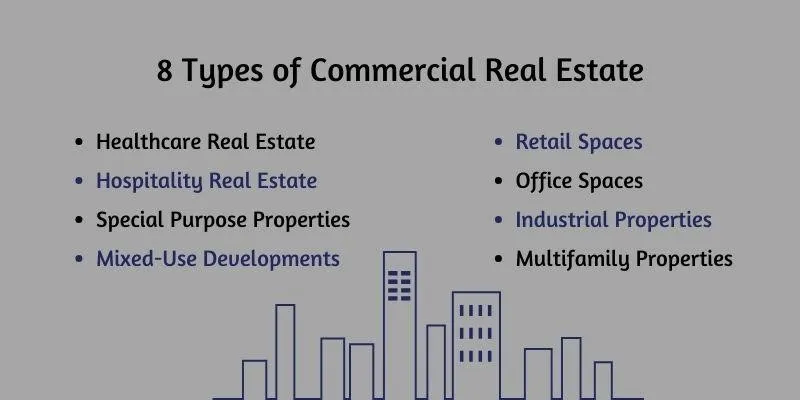
Dubai offers several categories of commercial properties. Each serves different business needs and investment goals. Let me break down the main types you’ll encounter in this market.
Office Spaces
Office spaces represent the largest segment of commercial real estate in Dubai. These range from serviced offices with flexible terms to entire floors in corporate towers.
Companies choose office locations based on their industry, client base, and budget. A tech startup might prefer a co-working space in a creative district. A law firm might need a traditional office in a prestigious business tower.
The variety includes:
- Grade A offices: Premium spaces in landmark towers with advanced facilities
- Grade B offices: Good quality spaces in established buildings
- Serviced offices: Fully furnished with shared amenities and flexible contracts
- Co-working spaces: Shared environments ideal for freelancers and small teams
- Business centers: Professional spaces with reception and meeting room services
Retail Properties
Retail properties include shops in malls, standalone stores on busy streets, and kiosks in high-traffic areas. Dubai’s retail sector thrives on tourism and a wealthy resident population.
Shopping centers like Dubai Mall and Mall of the Emirates house hundreds of retail units. Street-level shops in neighborhoods like Jumeirah also attract steady foot traffic. The right retail location can make or break a business.
Retail options span:
- Mall units (from small kiosks to anchor stores)
- Street-front shops in commercial areas
- Standalone buildings in high-visibility locations
- Food and beverage outlets in mixed-use developments
- Pop-up spaces for temporary retail concepts
Warehouses and Industrial Units
Warehouses and industrial units serve logistics, manufacturing, and distribution companies. Dubai’s strategic location between East and West makes it a global trade hub.
Industrial areas like Jebel Ali, Al Quoz, and Dubai Investment Park contain warehouses of various sizes. These properties often come with:
- Loading docks and high ceilings
- Accessibility for large vehicles
- Temperature-controlled storage options
- Office space attached to warehouse areas
- Security systems and 24/7 access
Understanding retail and industrial real estate Dubai dynamics is crucial if your business involves product storage, manufacturing, or distribution.
Mixed-Use Commercial Developments
Mixed-use commercial developments combine offices, retail spaces, and sometimes residential units in one complex. These projects create self-contained communities where people work, shop, and live.
Dubai Marina and Downtown Dubai feature several mixed-use towers. They offer convenience and diversification for investors who want exposure to multiple property types. These developments typically include:
- Ground floor retail with offices above
- Integrated parking and public spaces
- Shared amenities like gyms and restaurants
- Better foot traffic for retail tenants
- Higher property values due to comprehensive planning
Each category has unique characteristics, pricing structures, and tenant requirements. Your choice depends on your business model or investment strategy.
Best Locations for Commercial Real Estate in Dubai
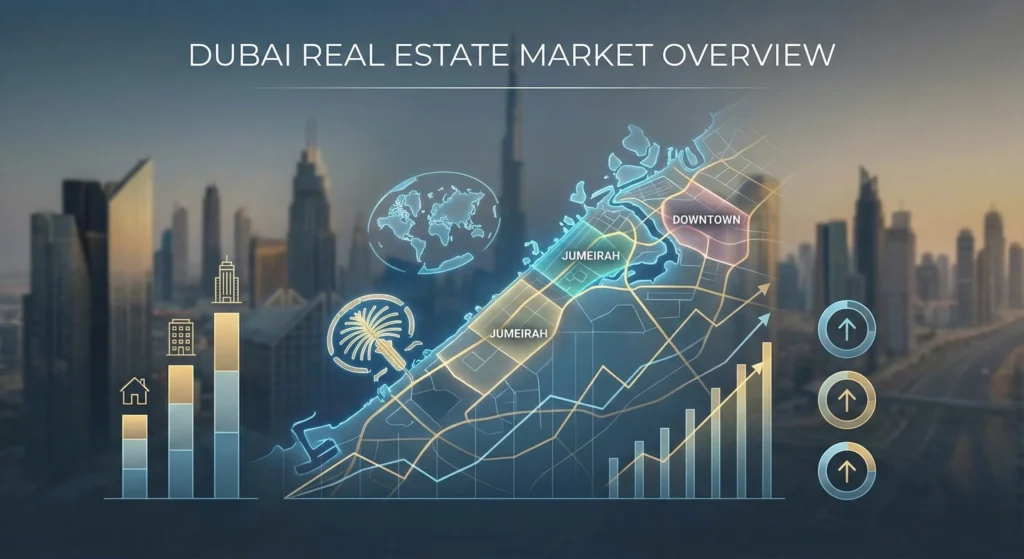
Location determines the success of most commercial ventures. Dubai offers distinct areas that cater to different business needs. Here’s what you should know about the top commercial zones.
Prime Business Districts
| Location | Best For | Key Features |
|---|---|---|
| Downtown Dubai | Corporate headquarters, professional services | Burj Khalifa proximity, premium image, high visibility |
| Business Bay | Financial services, consulting firms | Canal views, modern towers, good connectivity |
| DIFC | Banking, finance, legal services | Financial free zone, regulatory framework, prestige |
| Dubai Media City | Media, marketing, creative agencies | Industry cluster, modern facilities, creative environment |
Office space in Dubai’s central business districts commands premium rates but offers prestige and connectivity. Companies willing to pay for prime locations gain visibility and access to decision-makers.
Downtown Dubai and Business Bay are the city’s financial and corporate hearts. These areas house international banks, consulting firms, and multinational headquarters. The daily flow of professionals creates opportunities for service businesses like restaurants and corporate service providers.
Free Zones
Free zones provide special advantages for businesses. Popular commercial free zones include:
- Dubai Internet City: Technology and IT companies
- Dubai Media City: Media and creative industries
- Dubai Multi Commodities Centre (DMCC): Commodities trading and related services
- Dubai Silicon Oasis: Technology and electronics
- Jebel Ali Free Zone (JAFZA): Manufacturing and logistics
Many commercial real estate companies in Dubai have offices in free zones because they attract foreign investment. These areas allow 100% foreign ownership and offer tax benefits and streamlined company formation processes.
The advantages include:
- Zero corporate and personal income tax
- 100% repatriation of capital and profits
- No currency restrictions
- Simplified customs procedures
- Modern infrastructure and facilities
The downside? Free zone properties sometimes cost more than mainland alternatives. You also face restrictions on doing business outside the free zone without additional licensing.
Emerging Commercial Hubs
Emerging commercial hubs like Dubai South and Dubai Silicon Oasis present growth opportunities. These areas are developing rapidly as Dubai expands.
Property prices tend to be lower than in established districts. However, they may lack the immediate infrastructure and prestige of mature business centers. Early investors in these areas can benefit from appreciation as development progresses.
Consider these developing zones:
- Dubai South: Near Al Maktoum International Airport, logistics focus
- Dubai Production City: Media production and related services
- International Media Production Zone: Film and TV production facilities
- Dubai Outsource City: Business process outsourcing
Traditional Commercial Areas
Traditional commercial areas shouldn’t be overlooked either. Deira and Bur Dubai have been business centers for decades. They offer more affordable options and established customer bases.
Small businesses and retailers often thrive in these neighborhoods where rent is reasonable and competition is familiar. These areas feature:
- Lower rental rates compared to new districts
- Established customer traffic patterns
- Proximity to traditional markets and trading hubs
- Good public transport connectivity
- Mixed cultural and business environment
When evaluating locations, consider your target market, operational needs, and budget. A restaurant needs foot traffic. A warehouse needs truck access. An accounting firm needs professional surroundings. Match the location to your specific requirements.
Commercial Real Estate Market Trends in Dubai
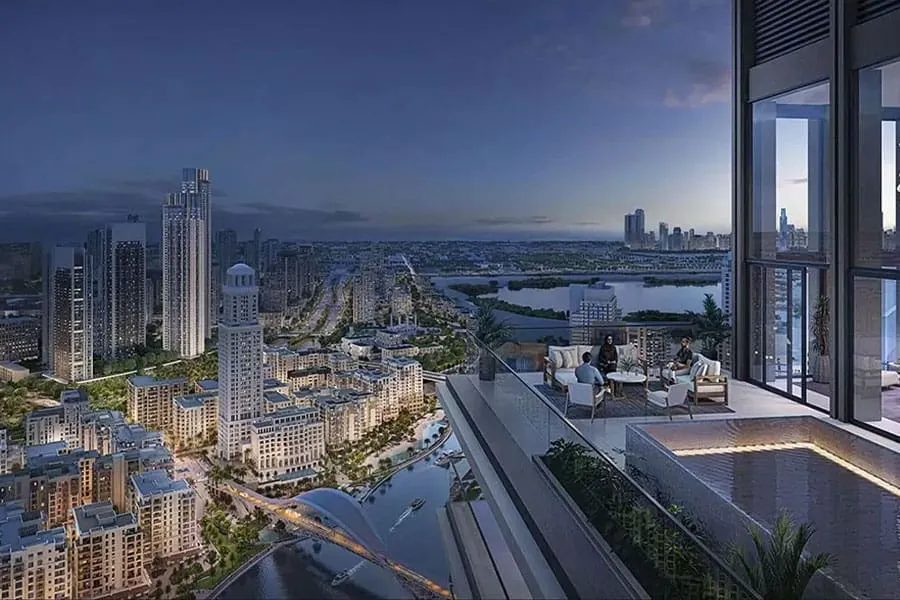
Dubai’s commercial property market moves in cycles, influenced by economic conditions, government policies, and global events. Understanding current trends helps you make smarter investment decisions.
Demand and Supply Dynamics
Demand and supply fluctuate based on business confidence. During periods of economic growth, more companies expand or enter the market. This pushes demand for office space in Dubai and other commercial properties.
New developments launch to meet this demand. Sometimes supply grows faster than demand, leading to:
- Higher vacancy rates in certain segments
- Softer rents and better negotiating power for tenants
- More competitive terms from landlords
- Longer lease-up periods for new developments
Recent years have seen shifts in how businesses use space. Remote work changed office requirements for many companies. Some reduced their physical footprint by 20-30%. Others redesigned spaces to support hybrid work models with more collaborative areas and fewer individual desks.
Rental Movement Patterns
Rental movement varies by property type and location. Here’s what the current market shows:
Prime locations in business districts generally maintain stable or growing rents. The best buildings with modern amenities command premium prices. Secondary locations may experience more volatility.
Retail rents depend heavily on consumer spending and tourism levels. Mall spaces in prime locations like Dubai Mall maintain strong rates. Smaller shopping centers face more pressure. Street retail performance varies by neighborhood traffic.
Industrial and warehouse rents tend to be more stable because logistics operations require consistent space. E-commerce growth has increased demand for warehousing, supporting rental rates in industrial zones.
Average rental yields for commercial properties currently range:
- Office spaces: 7-9% annually
- Retail units: 6-8% annually
- Warehouses: 8-10% annually
- Mixed-use: 6-9% annually
These figures vary significantly based on specific location and property quality.
Business and Economic Influence
Business and economic influence plays a major role in commercial real estate performance. Several factors currently shape the market:
Government initiatives like Expo 2020 (held in 2021-2022) boosted commercial activity. The event attracted international businesses that established regional offices. Many of these companies remained after the expo concluded.
New visa programs attracting remote workers and entrepreneurs increased demand for flexible office solutions. The 10-year Golden Visa and digital nomad visas brought professionals who need workspace but prefer flexibility over traditional leases.
Economic diversification efforts continue to create opportunities in sectors beyond oil and gas:
- Technology and innovation hubs expanding
- Creative industries growing rapidly
- Healthcare and biotechnology attracting investment
- Education sector developing specialized facilities
- Tourism infrastructure continuously expanding
Investors and businesses should monitor these trends without trying to time the market perfectly. Commercial real estate is a medium to long-term commitment. Short-term fluctuations matter less than fundamental location quality and property condition.
For deeper insights into market dynamics, explore our comprehensive Dubai real estate market overview.
Role of Commercial Real Estate Companies in Dubai

Commercial real estate companies in Dubai serve as crucial intermediaries in property transactions. They bring expertise that helps clients navigate a complex market. Understanding their role helps you leverage their services effectively.
Property Sourcing Services
Property sourcing is one of their primary functions. These companies maintain extensive databases of available properties. They understand what’s on the market before listings go public.
When you tell them your requirements, they can quickly identify suitable options. This saves you countless hours of searching through listings that don’t match your needs.
Professional sourcing includes:
- Access to off-market properties not publicly advertised
- Detailed property comparisons with accurate data
- Virtual and physical property tours
- Site selection analysis based on your business requirements
- Portfolio presentations tailored to your budget
Leasing and Sales Support
Leasing and sales services streamline transactions from start to finish. Commercial real estate firms handle negotiations, paperwork, and coordination between parties.
They know standard market terms and can spot unfair contract clauses. Their involvement often leads to better deals because they understand pricing benchmarks across different locations and property types.
Services typically include:
- Lease agreement preparation and review
- Rental negotiation to secure favorable terms
- Sale and purchase agreement management
- Coordination with lawyers and government entities
- Handling documentation and registration processes
Market Advisory and Intelligence
Market advisory helps clients make strategic decisions. Experienced companies track trends, analyze data, and provide forecasts based on real market intelligence.
They can advise whether to lease or buy, which areas offer the best value, and how economic conditions might affect your investment. This guidance is particularly valuable for foreign investors unfamiliar with Dubai’s market dynamics.
Advisory services cover:
- Market reports with current pricing and vacancy data
- Location analysis and feasibility studies
- Investment return projections
- Risk assessment and mitigation strategies
- Regulatory guidance and compliance support
Investment and Portfolio Management
Investment support goes beyond finding properties. Some firms offer comprehensive portfolio management, tenant placement, and property maintenance coordination.
For investors who don’t live in Dubai, these services are essential. The company becomes your local partner, handling day-to-day issues while you focus on strategy.
Management services include:
- Tenant screening and lease management
- Rent collection and financial reporting
- Property maintenance coordination
- Contract renewal negotiations
- Exit strategy planning when you’re ready to sell
Reputable commercial real estate companies operate transparently. They disclose their fees upfront (typically 2-5% of transaction value) and provide honest assessments. Working with established firms reduces your risk and increases your chances of success.
Commercial Real Estate Agents in Dubai
Individual commercial real estate agents Dubai professionals often work for larger companies or operate independently. Understanding their role helps you work with them effectively and get the best results.
Responsibilities and Functions
Responsibilities of agents include showing properties, explaining terms, and facilitating communications between buyers and sellers or landlords and tenants.
A good agent listens to your needs and presents relevant options. They don’t waste your time with unsuitable properties that don’t match your criteria. They also provide market context, helping you understand whether asking prices are reasonable.
Professional agents handle:
- Initial consultation to understand your requirements
- Property viewings with detailed explanations
- Comparative market analysis
- Negotiation on your behalf
- Documentation and legal coordination
- Post-transaction support and follow-up
Licensing and Professional Standards
Importance of licensed professionals cannot be overstated. Dubai requires real estate agents to be registered with the Real Estate Regulatory Agency (RERA).
Licensed agents follow professional standards and ethical guidelines. They carry insurance that protects clients in case of errors or omissions. Never work with unlicensed individuals, regardless of how good their deals seem.
Look for agents with:
- Valid RERA registration (you can verify online)
- Professional certifications and training
- Membership in recognized real estate organizations
- Transparent fee structures
- Verifiable track record and references
How Agents Add Value
How agents help buyers, tenants, and investors varies by situation, but the core value remains consistent across all transactions.
Tenants benefit from agents who know available spaces and can negotiate favorable lease terms. They save time by viewing only properties that meet specific requirements. Agents also help tenants understand lease clauses that might create future problems.
Buyers need agents who understand property values and can identify problems before purchase. A skilled agent spots issues like structural concerns, title problems, or unfavorable building management situations. They also have networks that sometimes reveal off-market opportunities.
Investors want agents who think about long-term returns and can recommend properties with strong fundamentals. The best agents consider factors like:
- Future area development plans
- Tenant demand trends in specific sectors
- Building quality and maintenance history
- Exit strategy possibilities
- Comparable sales and rental data
The best agents build relationships rather than just closing deals. They stay in touch after transactions, provide market updates, and become trusted advisors. Finding such professionals takes effort, but the investment pays off over years of successful transactions.
Look for agents with specific commercial experience. Residential and commercial real estate require different knowledge sets. An agent who excels at selling apartments may not understand retail and industrial real estate Dubai dynamics. Specialization matters significantly in commercial transactions.
When interviewing potential agents, ask about:
- Their experience in your specific property type
- Recent transactions similar to what you’re seeking
- Their approach to market analysis
- How they communicate and how often
- References from past commercial clients
For more guidance on working with real estate professionals, visit our resource on real estate valuation services in Dubai.
Things to Consider Before Investing in Commercial Property in Dubai
Smart investors do their homework before committing capital to commercial property in Dubai. Several factors deserve careful consideration to ensure your investment aligns with your goals and risk tolerance.
Budget and Financing Planning
Budget and financing form the foundation of any investment decision. Commercial properties typically require larger down payments than residential ones. Banks may finance 50% to 70% of the property value, depending on your profile and the asset quality.
Calculate all costs including:
- Purchase price: The property value itself
- Registration fees: 4% of property value paid to Dubai Land Department
- Agency commissions: Typically 2% for buyer’s agent
- Legal fees: AED 10,000-25,000 for proper documentation review
- Valuation fees: AED 2,500-5,000 for bank requirements
- Maintenance reserves: First year’s service charges upfront
- Fit-out costs: Customizing space for your business needs
Know exactly what you can afford before starting your search. Create a comprehensive budget that includes 10-15% contingency for unexpected expenses.
Interest rates affect your returns significantly. Even small rate differences compound over years. Compare offers from multiple banks. Consider both conventional and Islamic financing options. Some investors prefer to buy properties outright to avoid interest costs and maintain maximum flexibility.
Current commercial mortgage rates in Dubai range from 4-6% annually for qualified borrowers. Your personal or company financial profile strongly influences the rates you’ll receive.
Location Suitability Analysis
Location suitability impacts everything from tenant quality to property appreciation. A warehouse in the wrong industrial area may sit vacant for months. An office in a declining business district loses value even if the building itself is well-maintained.
Research the area’s growth prospects, infrastructure plans, and tenant demographics. Key factors include:
Accessibility: How easily can clients, employees, and suppliers reach the property?
- Proximity to metro stations
- Major highway access
- Parking availability
- Public transport options
Area Development: What’s planned for the surrounding neighborhood?
- Upcoming infrastructure projects
- New residential or commercial developments
- Government investment in the area
- Announced corporate relocations
Competition: What similar properties exist nearby?
- Current vacancy rates in the area
- Asking rents for comparable spaces
- Quality of competing buildings
- Tenant mix and business types
Visit properties multiple times at different hours. The same location can feel completely different at 9 AM versus 6 PM. Talk to neighboring businesses about their experience in the area. Ground-level intelligence often reveals insights that statistics miss.
Legal and Regulatory Factors
Legal and regulatory factors require professional guidance. Dubai’s property laws are clear but complex. Foreign ownership restrictions vary by area.
Some zones allow freehold ownership while others offer leasehold only. Understanding these distinctions prevents costly mistakes:
| Ownership Type | What It Means | Duration |
|---|---|---|
| Freehold | Full ownership rights | Perpetual |
| Leasehold | Long-term rental | Typically 99 years |
| Usufruct | Right to use and profit | Usually 99 years |
Hire a lawyer to review contracts before signing anything. Legal fees are small compared to the potential losses from undiscovered problems. Ensure the property has clear title with no encumbrances.
Verify that:
- All building approvals are in order
- Occupancy certificates are valid
- No outstanding service charge debts exist
- Property boundaries match official records
- No legal disputes affect the property
The Dubai Land Department maintains official records you can check before purchasing.
Expected Returns and Performance Metrics
Expected returns should be realistic and based on actual market data, not optimistic projections. Commercial properties in Dubai typically yield 6% to 9% annually through rent, though this varies widely by property type and location.
Capital appreciation is less predictable but can be substantial in developing areas. Calculate potential returns under different scenarios including extended vacancy periods.
Key performance metrics to calculate:
Gross Rental Yield: (Annual Rent / Purchase Price) × 100
Net Rental Yield: (Annual Rent – Annual Expenses) / Purchase Price × 100
Cash-on-Cash Return: (Annual Pre-Tax Cash Flow / Total Cash Invested) × 100
Capitalization Rate: Net Operating Income / Current Market Value
Don’t rely on the seller’s or agent’s projections alone. Do your own analysis using conservative assumptions. Factor in:
- Property management costs (typically 5-8% of rent)
- Annual maintenance and repairs
- Potential void periods (vacancy)
- Service charges and utilities
- Insurance and property taxes
The investment should still make sense even if everything doesn’t go perfectly. Build in a safety margin of at least 15-20% below projected returns.
Consider your investment timeline. Commercial real estate usually requires 5-7 years minimum to realize optimal returns. Shorter timeframes expose you to market volatility and transaction costs that erode profits.
FAQs: People Also Ask

Is commercial real estate in Dubai a good investment?
Commercial real estate in Dubai can be a solid investment for those who do proper research and select quality properties. The market offers stable rental yields ranging from 6-9% annually in established areas, which is competitive with global commercial real estate markets.
Dubai’s status as a business hub provides several advantages:
Strong demand from multinational corporations
Investor-friendly policies and transparent regulations
Tax-free environment for most commercial activities
Strategic location connecting East and West
Modern infrastructure and business facilities
However, like all investments, commercial property carries risks. Market fluctuations can affect property values and rental rates. Vacancy periods reduce income. Economic downturns impact tenant quality and payment reliability.
Success depends on choosing the right property, location, and timing. Properties in prime locations with quality tenants tend to perform better during market corrections. Diversifying across property types can reduce overall risk.
Can foreign investors buy commercial property in Dubai?
Yes, foreign investors can buy commercial property in Dubai in designated freehold areas without restrictions. These include:
Downtown Dubai
Business Bay
Dubai Marina
Dubai Internet City
Dubai Media City
DIFC (Dubai International Financial Centre)
DMCC (Dubai Multi Commodities Centre)
Many other free zones
Foreign ownership is 100% in these zones, with no restrictions on nationality. You can own, lease, and sell properties freely. Some areas only offer leasehold arrangements, typically for 99 years, which still provides long-term control.
Always verify the ownership status of a specific property before purchasing. Check with Dubai Land Department or work with licensed agents to confirm ownership rights. Working with qualified lawyers ensures compliance with all regulations and protects your investment.
Foreign investors also need to consider:
Obtaining a UAE residency visa (often available through property purchase)
Understanding repatriation rules for profits
Tax implications in your home country
Estate planning for property inheritance
How do I find reliable commercial real estate agents in Dubai?
Finding reliable commercial real estate agents in Dubai requires research and due diligence. Follow these steps:
Start with official sources: Check the RERA (Real Estate Regulatory Agency) website for registered agents and companies. Only work with properly licensed professionals.
Look for specialization: Find agents with specific commercial experience in your area of interest. Ask about their recent transactions in office, retail, or industrial properties.
Ask for references: Request contact information for past clients. Speak with them about their experience working with the agent. Good agents willingly provide references.
Verify their track record: Look for agents who have been active in the market for several years. They’ll have better market knowledge and established relationships.
Interview multiple agents: Don’t commit to the first agent you meet. Talk to at least 3-5 professionals to compare their approach, knowledge, and terms.
Personal referrals work best: Ask business contacts in Dubai for recommendations. People who’ve successfully completed commercial transactions can point you toward trustworthy professionals.
Warning signs to avoid:
Unlicensed or unregistered agents
Promises that sound too good to be true
Pressure to make quick decisions
Reluctance to provide references
Unclear fee structures
Reputable agents are transparent about their fees (typically 2-5% of transaction value) and provide detailed market information to help you make informed decisions.
Conclusion
Understanding commercial real estate in Dubai requires more than just browsing listings online. The market offers tremendous opportunities for businesses and investors who approach it strategically and with proper knowledge. From choosing between office, retail, or industrial properties to selecting the right location and working with qualified professionals, every decision impacts your success.
Dubai’s growing economy and business-friendly environment continue to attract global interest. The city’s strategic position, world-class infrastructure, and progressive regulations make it an attractive destination for commercial property investment. However, success isn’t automatic. It comes from thorough research, realistic expectations, and smart decision-making.
Take time to research thoroughly. Visit properties in person when possible. Consult with experienced commercial real estate companies in Dubai who know the market inside and out. Plan for the long term rather than chasing short-term gains. Build relationships with licensed agents, qualified lawyers, and financial advisors who can guide you through complex transactions.
Whether you’re looking for office space in Dubai to establish your business, seeking retail locations to reach customers, or building an investment portfolio with income-generating properties, the fundamentals remain the same. Location quality matters. Property condition impacts returns. Tenant selection determines your experience as a landlord. Professional guidance reduces risk.
With the right knowledge, realistic expectations, and professional support, your commercial property venture in Dubai can achieve your business and investment goals. The market rewards those who do their homework, think strategically, and commit to quality over quick profits.