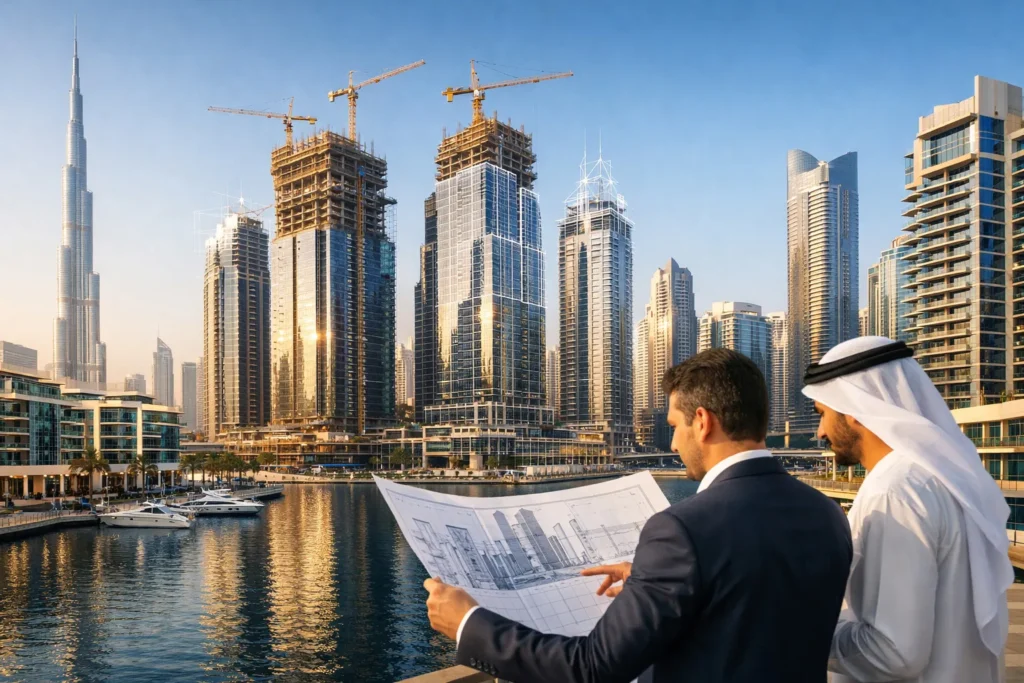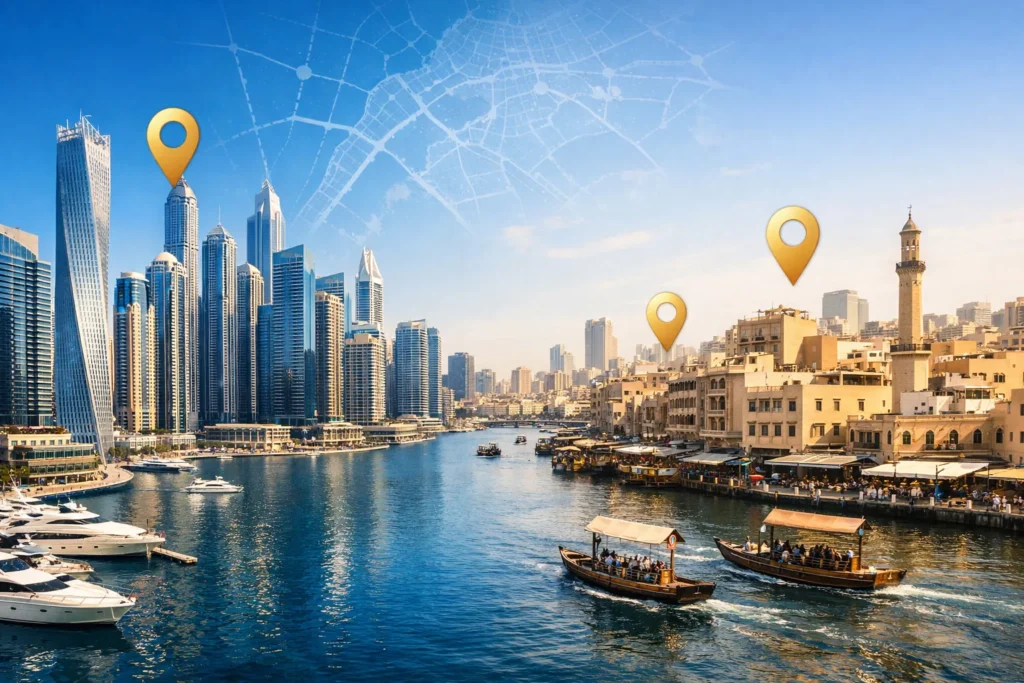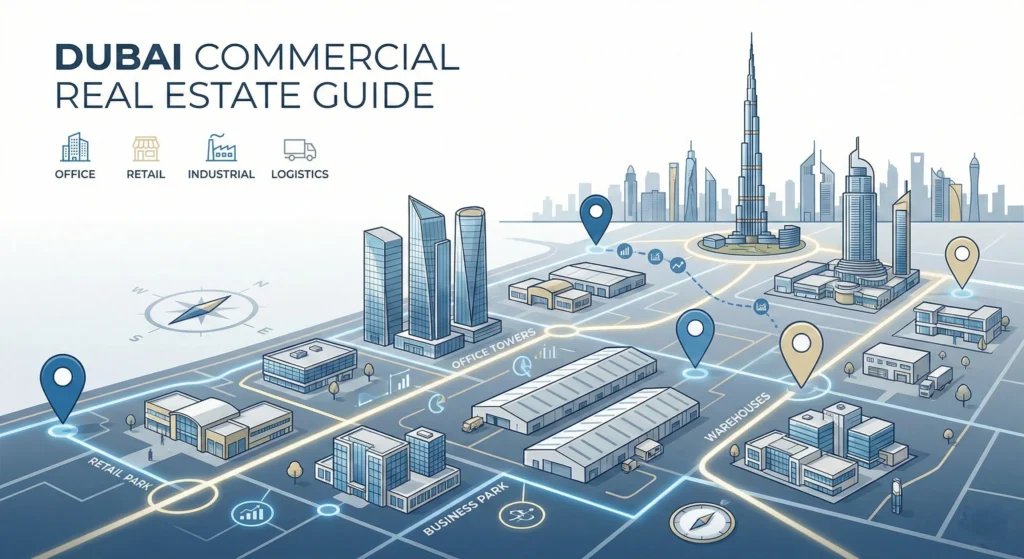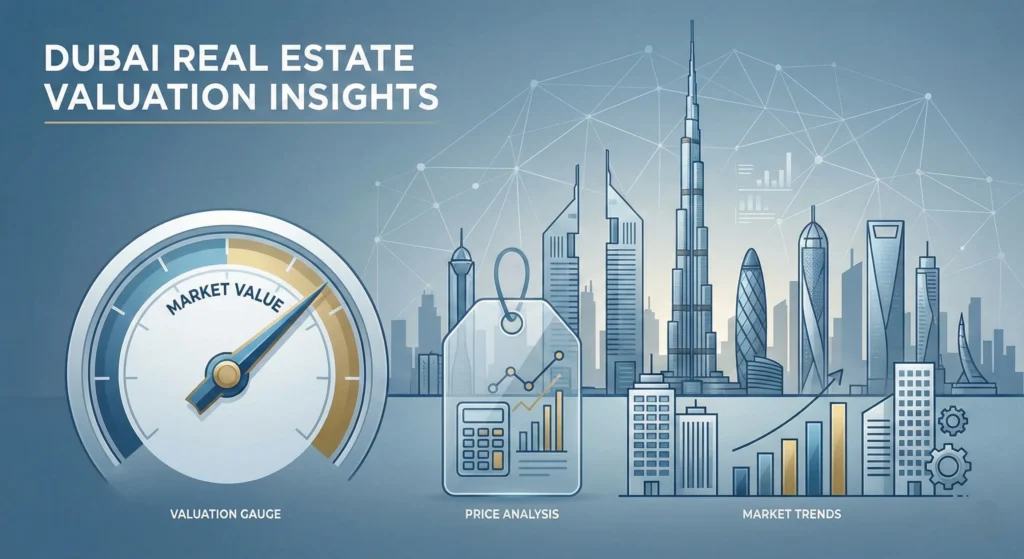

Dubai is not just a city of skyscrapers and luxury cars anymore. It has quietly become one of the smartest places in the world to put your money into real estate.
If you’ve been thinking about investing in property, you’ve probably heard Dubai mentioned more than once. And there’s a good reason for that. The city offers something that very few places can match: a combination of high returns, zero taxes, and a stable market that keeps growing year after year.
But what makes Dubai so special? Why are investors from India, Europe, America, and Asia all looking at the same sandy city in the Middle East? Let’s break it down in a way that makes sense, without the confusing financial talk.
Why Dubai Has Become a Real Estate Magnet
Think of Dubai like a well-oiled machine. Everything works. The government plans decades. The infrastructure is world-class. And most importantly, they actually want foreign investors to come in and be part of the growth story.
Unlike many countries where buying property as a foreigner is complicated or restricted, Dubai rolls out the red carpet. They’ve built an entire system designed to make investing easy, safe, and profitable.
The city sits at the crossroads between East and West. It’s a major business hub. Millions of people pass through Dubai International Airport every year. Companies set up their regional headquarters here. All of this creates constant demand for housing, which is exactly what property investors want to see.
Dubai’s economy is strong and diverse. Yes, oil was part of the story decades ago. But today, the city runs on tourism, trade, finance, technology, and real estate. This diversity makes it more stable than cities that depend on just one industry.
The government is also very clear about its rules. There’s no confusion about ownership rights. No surprise changes in policy that hurt investors. This transparency gives people confidence to invest large amounts of money without fear. According to the Dubai Land Department, all property transactions are properly regulated and recorded, giving investors additional security.
The Real Benefits That Matter to Your Wallet
Now let’s get into the details that actually affect your returns and your decision to invest.
High Rental Yield That Beats Most Global Cities
Here’s a simple comparison. If you buy a property in many major cities around the world, you might get a rental yield of 3% to 4% per year. That’s considered normal.
In Dubai, rental yields often range from 6% to 10% annually. Some properties in high-demand areas can even go higher.
What does this mean in real terms? Let’s say you buy an apartment for $300,000. With a 7% rental yield, you’re earning $21,000 per year just from rent. That’s solid passive income.
Compare this to putting the same money in a regular savings account or even some stock investments. The rental income from Dubai property can be more predictable and more substantial.
The reason for these high yields is simple economics. Dubai has a huge expatriate population. Most people who live here are not citizens. They rent homes. The demand for rental properties stays consistently high, which keeps rents strong and vacancy rates low.
Popular areas like Dubai Marina, Downtown Dubai, and Business Bay have especially high demand. Young professionals, families, and business executives all need places to live. And they’re willing to pay good money for quality apartments in prime locations.
Zero Property Tax Means You Keep More Money
This is probably the single biggest financial benefit of buying property in Dubai. There is no property tax. None.
Think about what this means. In most countries, owning property comes with annual taxes. These can be 1% to 3% of the property value every single year. On a $500,000 property, that could be $5,000 to $15,000 going to taxes annually.
In Dubai, you pay zero. That money stays in your pocket.
But it gets even better. There’s also no capital gains tax. If you buy a property for $300,000 and sell it five years later for $450,000, that $150,000 profit is yours to keep. The government doesn’t take a percentage.
And rental income? Also tax-free. Every dollar you collect from your tenants goes straight to you without any deductions for income tax on that rental amount.
When you add all of this together, the actual returns you keep from a Dubai property investment are significantly higher than what you’d keep in most other countries, even if those countries had similar rental yields on paper.
This tax structure is not a loophole or a temporary benefit. It’s built into how Dubai operates as a business-friendly city.
Full Ownership Rights for Foreign Investors
In many countries, foreigners can’t own property at all. In others, there are complicated restrictions. You might only get a leasehold. Or you need a local partner. Or there are limits on which areas you can buy in.
Dubai changed all of this with freehold zones. In designated areas throughout the city, foreign investors can own property with 100% ownership rights. No local partner needed. No time limit on your ownership.
You get the property registered in your name. You can sell it whenever you want. You can rent it out. You can pass it on to your children. It’s yours completely.
This legal clarity is huge for serious investors. You’re not dealing with uncertainty about your ownership status. Everything is documented clearly with the Dubai Land Department.
The freehold areas include all the major investment zones like Dubai Marina, Palm Jumeirah, Downtown Dubai, Dubai Hills Estate, and many others. These are exactly the areas where demand is highest and where property values have shown the strongest growth.
Property Values Keep Growing
Dubai real estate has shown consistent capital appreciation over the long term. Yes, like any market, there are ups and downs in the short term. But the overall trend points upward.
Why does this happen? Several reasons work together.
First, Dubai’s population keeps growing. More people need more housing. Simple supply and demand.
Second, the government keeps building infrastructure that makes different areas more valuable. New metro lines. Better roads. Parks and community facilities. Each of these upgrades makes nearby properties worth more.
Third, major events and projects create waves of interest. Expo 2020 (held in 2021-2022) brought millions of visitors and created new business opportunities. Dubai’s selection to host COP28 put the city on the world stage again. These events bring international attention and investment.
Fourth, Dubai actively courts specific types of residents. Remote workers. Tech professionals. Wealthy retirees. Each group that comes to live in Dubai creates demand for housing.
Properties in prime locations have seen especially strong growth. Areas with waterfront views, metro access, or proximity to business districts tend to appreciate faster than others. If you’re interested in exploring specific neighborhoods, you can learn more about the best areas to invest in Dubai property.
If you bought property in Dubai Marina ten years ago, you’ve likely seen significant appreciation. The same is true for Downtown Dubai and other established areas.
Even newer areas like Dubai Hills Estate and Jumeirah Village Circle have shown strong growth as they’ve matured and as more amenities have been added.
Flexible Payment Plans Make Entry Easier
One of the smartest things Dubai developers do is offer payment plans that make property investment accessible to more people.
Instead of needing the full purchase price upfront, many developers offer plans where you pay 10% to 20% as a down payment. Then you pay the rest in instalments during construction and even after the property is completed.
Some plans stretch payments over five to seven years after you get the keys. This means you can start renting out the property and use that rental income to help cover your payment iinstalments
Think of it like this. You put down $50,000 on a $300,000 property. The developer builds it over the next two years while you make small payments. You get the keys. You rent it out immediately. The rental income is $21,000 per year. That money helps you pay the remaining ininstalmentso the developer.
This structure allows investors to control multiple properties without tying up huge amounts of capital in one purchase. It’s a smart way to build a real estate portfolio faster.
Off-plan properties (properties sold before construction is complete) usually have the most attractive payment plans. They also tend to be priced lower than ready properties in the same area, giving you built-in appreciation potential as the project nears completion.
A Residence Visa Comes with Your Property
This is a benefit that goes beyond just financial returns. Buy property above a certain value in Dubai, and you can qualify for a residence visa.
The current threshold is AED 750,000 (approximately $204,000). Buy a property at or above this value, and you can apply for a residence visa for yourself and your immediate family.
What does this give you? The right to live in Dubai. Your children can attend schools here. You can open bank accounts easily. You can access healthcare. You get a base in a global city with excellent connectivity to the rest of the world.
For investors from countries with limited passport power, this is especially valuable. Dubai becomes a second home. A place where you and your family can build a life if you choose to.
Even if you don’t plan to live in Dubai full-time, having residence here opens doors. You can conduct business more easily. Travel becomes simpler with a UAE residence visa. And you have the option to relocate if circumstances in your home country change.
Some investors value this residency benefit as much as the financial returns from the property itself. Understanding the Dubai property investor visa requirements can help you plan your investment to maximize both financial and lifestyle benefits.
Different Property Types for Different Goals
Not all properties are created equal. Depending on what you want from your investment, different types of properties make sense.
Apartments in established areas are the most straightforward rental investment. Places like Dubai Marina, JBR, and Business Bay have constant tenant demand. You buy a one or two-bedroom apartment. You rent it out immediately. The cash flow starts right away.
These properties are usually fully built and ready to move in. You don’t wait for construction. The rental market is proven. You know exactly what rental rates you can expect.
Off-plan properties are sold before or during construction. These typically cost less than ready properties in the same area. You get to buy at today’s prices in an area that will be more developed (and more expensive) when construction finishes.
The downside is that you need to wait for construction to complete before you can rent it out. But the payment plans are better, and the appreciation potential is higher. Many investors buy off-plan specifically for the capital gains, planning to sell when the property is complete rather than renting it out.
Villas and townhouses appeal to families and generally command higher rents. Areas like Arabian Ranches, Dubai Hills Estate, and Damac Hills have strong demand from expatriate families who want more space and a community feel.
These properties require larger investments but can provide excellent long-term stability. Families who rent villas tend to stay longer than apartment tenants, giving you more consistent income with less turnover.
Luxury and waterfront properties are at the premium end of the market. Palm Jumeirah villas, penthouses in Downtown Dubai, and beachfront apartments in JBR attract wealthy tenants and buyers.
These properties have higher price points but also attract less price-sensitive tenants. During economic downturns, luxury properties can be more affected, but during good times, they can provide exceptional returns.
The right choice depends on your budget, your risk tolerance, and whether you prioritise immediate cash flow or long-term appreciation.
Who Should Seriously Consider Dubai Property
Dubai real estate isn’t just for wealthy investors or corporations. It works for several different types of people.
Long-term investors who want to build wealth over 5, 10, or 20 years find Dubai attractive because of the combination of rental income and appreciation. You’re not looking to flip properties quickly. You’re building a portfolio that generates passive income and grows in value.
Non-Resident Indians (NRIs) represent one of the largest groups of investors in Dubai. The proximity to India, the large Indian community in Dubai, and the strong rental market make it a natural choice. Many NRIs buy property in Dubai as a way to diversify away from India while staying in a region they understand.
Expatriates working in Gulf countries often invest in Dubai because they already understand the region. They might be working in Saudi Arabia, Qatar, or Kuwait but choose Dubai for investment because of its more developed market and better lifestyle amenities.
Retirees looking for secure income appreciate the stable rental yields and tax-free income. Dubai property can be part of a retirement income strategy, providing monthly cash flow without the volatility of stock markets.
Portfolio diversifiers who already have investments in their home country add Dubai property to spread risk across different markets and currencies. If your home market faces challenges, your Dubai property continues generating income in a different economic environment.
You don’t need to be ultra-wealthy to start. Studio and one-bedroom apartments in good areas can be found for $150,000 to $250,000. That’s accessible to many middle-class investors, especially with payment plans.
The Practical Side: What Actually Happens When You Buy
Let’s talk about the actual process because knowing what to expect makes the decision easier.
First, you identify the property you want. You can work with real estate agents who specialize in investment properties. They understand rental yields, tenant demand, and which areas are best for your goals.
You pay a booking deposit, usually 5% to 10% of the property price. This secures the property for you.
Then you sign the Sale and Purchase Agreement. This is the legal contract between you and the developer or seller. Everything is documented clearly.
You make payments according to the agreed schedule. For off-plan properties, this is usually tied to construction milestones. For ready properties, you might have a shorter payment period.
The developer registers the property with the Dubai Land Department. You get an official title deed in your name. This is the document that proves your ownership.
If you’re buying for investment, you can start looking for tenants even before you get the keys if it’s a ready property. Property management companies can handle everything from finding tenants to collecting rent to handling maintenance.
Many investors never even visit their Dubai properties. Everything can be managed remotely. The rental income gets deposited to your bank account automatically each month.
What Makes Dubai Different from Other Investment Cities
You might be wondering how Dubai compares to other popular investment destinations like London, Singapore, or New York.
The biggest difference is the tax structure. Those other cities all have property taxes, capital gains taxes, and income taxes on rental earnings. Dubai has none of these. Your net returns are simply higher, even if gross yields were the same.
Another difference is accessibility to foreign investors. Many global cities have restrictions or additional taxes for foreign buyers. Dubai actively encourages foreign investment with no extra fees or limitations.
The payment plans offered by Dubai developers are also unusual. In most developed markets, you need a large down payment and a mortgage for the rest. Dubai’s developer payment plans provide an alternative that requires less upfront capital.
Dubai’s growth trajectory is different too. It’s still a relatively young city that’s actively building and expanding. Established cities like London or New York are largely built out. Dubai still has room to grow, which creates more opportunities for appreciation.
The rental market dynamics are unique. With over 80% of the population being expatriates who rent rather than own, the rental demand is structurally different from cities where most residents are homeowners.
Understanding the Risks (Because Every Investment Has Them)
No investment is without risk, and Dubai property is no exception. But understanding the risks helps you make better decisions.
Market cycles exist everywhere. Dubai has had periods of rapid growth and periods of correction. The key is investing for the long term rather than trying to time the market perfectly.
Oversupply in certain areas can affect rental rates and property values. Some secondary locations have more supply than demand, which keeps rents lower. This is why location research is critical.
Economic dependence on global conditions means Dubai can be affected by international economic problems. The city is connected to global trade and finance, so worldwide recessions can impact the market.
Currency fluctuation is a factor if you’re earning income in one currency but the property is priced in USD or AED. Exchange rate changes can affect your returns when you convert money back to your home currency.
Tenant turnover can create vacancy periods where you’re not collecting rent. This is more common in some areas than others, which is why choosing locations with stable tenant demand matters.
These risks are manageable through research, location selection, and long-term thinking. They shouldn’t scare you away from investing, but they should inform how you approach your investment strategy.
The Bottom Line on Dubai Property Investment
After looking at all the factors, the benefit of buying property in Dubai comes down to a simple equation. You get high rental yields, tax-free income, capital appreciation potential, and full ownership rights in a stable market with strong infrastructure.
Very few places in the world offer this combination. That’s why investors keep coming to Dubai despite having options all over the globe.
If you’re thinking about diversifying your investments, building passive income, or simply getting exposure to international real estate, Dubai deserves serious consideration. The numbers work. The legal framework is clear. The market has proven itself over two decades.
Start by researching specific areas that match your budget and goals. Talk to investors who have already bought property in Dubai. Look at actual rental yields in different communities. Visit if you can, but know that you can also invest remotely with the help of reputable agents and legal advisors.
Dubai real estate is not a get-rich-quick scheme. It’s a solid, long-term investment that provides both immediate income and future appreciation. For investors who understand this and commit for the long haul, the rewards can be substantial.
The city continues to grow, attract global talent, and build world-class infrastructure. All of these factors support property values and rental demand. And with the government’s clear vision for the future, Dubai’s real estate market is positioned to keep delivering value to investors for years to come.
Whether you’re a first-time investor or adding to an existing portfolio, Dubai property offers something that’s increasingly rare: a combination of strong returns, legal clarity, and genuine long-term potential. That’s why smart investors from around the world keep choosing Dubai as their destination for real estate investment.